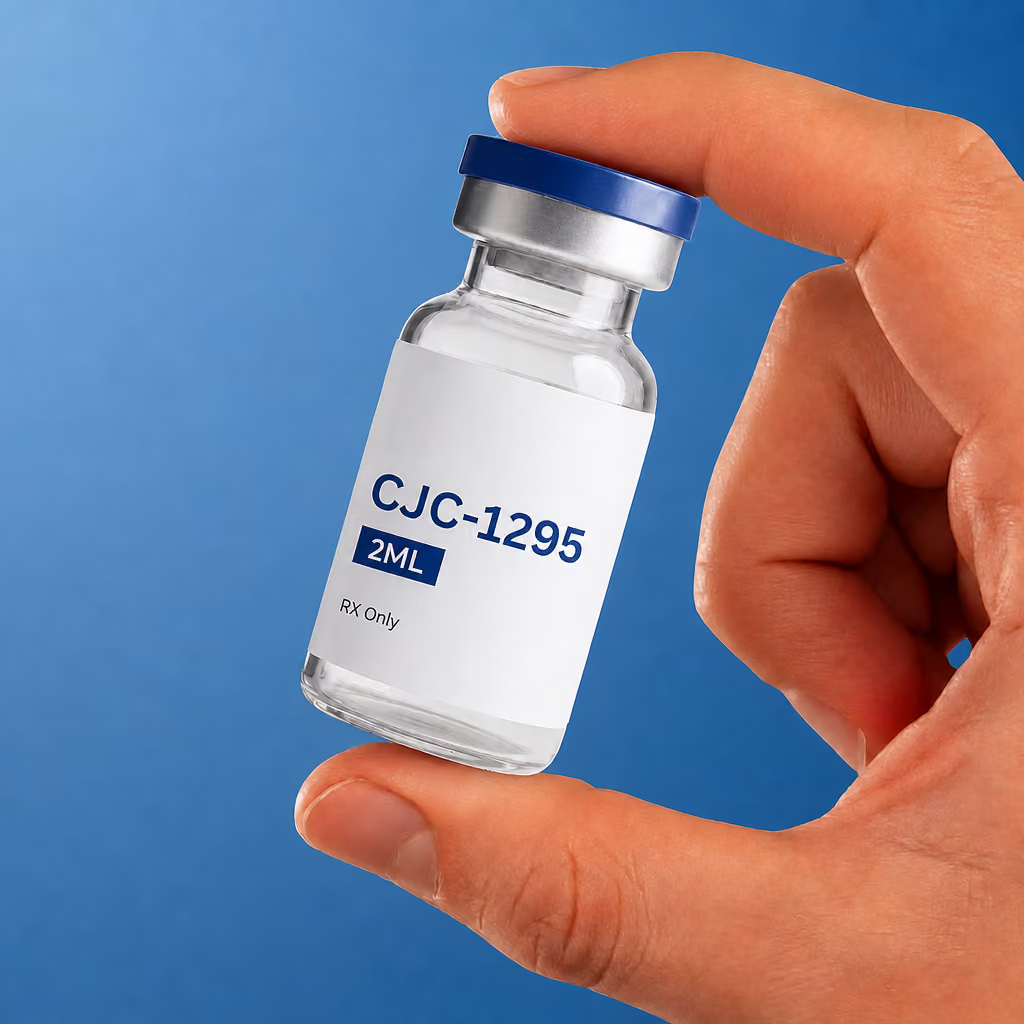
CJC-1295, Sleep and Energy: What the Evidence Shows
An honest look at whether CJC-1295 can improve sleep and daytime energy, what the published research actually measured, and how to set realistic expectations with your prescriber.
- Growth hormone is released mainly during deep sleep, which is why CJC-1295 is often linked with sleep.
- Published CJC-1295 studies measured hormone levels only; none measured sleep quality or energy.
- A single dose raised growth hormone for six days or more and preserved its natural nightly pulses.
- Tiredness and poor sleep have many common causes that should be checked before any peptide is considered.
- Any personal change in sleep or energy should be tracked and discussed with your prescriber, not assumed.
- No specific dose or timeline for sleep or energy benefits is supported by evidence.
In this article
Better sleep and more daytime energy are among the most common reasons people ask about CJC-1295. This article looks at that question honestly. It explains why growth hormone and sleep are connected, what CJC-1295 research did and did not measure, and how to set realistic expectations. An earlier version of this page was labelled a case study but did not describe a real patient, so we have rewritten it to reflect the evidence. For an overview of what CJC-1295 is, see our guide to what CJC-1295 is.
CJC-1295 is not approved by the FDA for any use. It is prescribed at a licensed physician's discretion after a medical review. This article is educational and is not medical advice.
Why Growth Hormone and Sleep Are Linked
Growth hormone is not released at a steady rate through the day. Most of it is released in pulses, and the largest pulse usually comes in the first few hours after falling asleep, during deep, slow wave sleep. When deep sleep is disrupted, for example by poor sleep habits, alcohol or sleep apnea, growth hormone release tends to fall. Growth hormone output also declines with age, alongside changes in sleep depth.
This connection is why CJC-1295 is often described as a sleep aid. The reasoning goes that raising growth hormone should support deeper, more restorative sleep. It is an understandable idea, but the direction of cause matters. Deep sleep drives growth hormone release. It has not been shown that raising growth hormone with a peptide improves sleep.
What CJC-1295 Research Measured
The human research on CJC-1295 focused on hormone levels. In two placebo controlled trials in healthy adults, a single injection raised growth hormone two to tenfold for six days or more and IGF-1 one and a half to threefold for nine to eleven days. A separate study sampled blood every 20 minutes through the night in healthy men before and one week after a dose. It found that CJC-1295 raised trough and mean growth hormone while preserving the natural pulse pattern, including the nightly pulses.
That second study is the closest the research comes to sleep. It shows that CJC-1295 does not switch off the body's own rhythm of growth hormone release at night. It did not measure how well people slept, how rested they felt or how much energy they had the next day.
What the Research Did Not Measure
No published CJC-1295 study has measured:
- Sleep quality, sleep duration or time in deep sleep.
- Daytime energy, fatigue or alertness.
- Mood, concentration or quality of life.
The human studies were also short, lasting weeks rather than months, and enrolled a few dozen healthy volunteers. Our summary of CJC-1295 clinical studies sets out exactly what each one found. Claims that CJC-1295 improves sleep within a set number of weeks, or that a particular dose gives a particular energy boost, go beyond what has been studied.
Frequently Asked Questions
Does CJC-1295 improve sleep?
It has not been shown to. Published CJC-1295 studies measured growth hormone and IGF-1 levels but not sleep quality. Growth hormone is released mostly during deep sleep, but that does not mean raising it improves sleep.
Will CJC-1295 give me more energy?
No published study has measured energy or fatigue with CJC-1295. Some people report feeling more energetic, but without placebo controlled data it is not possible to say how much is due to the peptide.
How long does it take to notice a difference in sleep?
There is no evidence based timeline. Any change is individual and should be tracked with a sleep and energy diary and discussed with your prescriber.
Can CJC-1295 make sleep worse?
Possibly. Effects linked to raised growth hormone, such as fluid retention, joint aches and tingling in the hands, can be uncomfortable at night. Tell your prescriber if your sleep gets worse.
What should I check before trying CJC-1295 for tiredness?
Common causes such as sleep apnea, thyroid problems, low iron or vitamin B12, low mood, medicines, alcohol and sleep habits should be checked first, because they are common and treatable.
Is CJC-1295 legal and regulated?
CJC-1295 is not FDA approved for any use. It should only be used under the care of a licensed physician after a medical review, and it is prohibited in tested sport.
Why People Report Changes Anyway
Some people who use CJC-1295 under medical supervision report that they sleep more deeply or feel more energetic. These personal reports are worth taking seriously as individual experiences, but they are hard to interpret. Starting a new treatment often comes with other changes, such as more attention to sleep habits, exercise and diet, and simply expecting to feel better can change how people rate their sleep. Without a placebo comparison, it is not possible to say how much of any change is due to the peptide.
It is also worth knowing that some effects of raised growth hormone can work against sleep. Fluid retention, joint aches and tingling in the hands can be uncomfortable at night. If sleep gets worse after starting treatment, tell your prescriber rather than assuming it will settle. Our guide to managing common CJC-1295 side effects covers what to watch for.
Does the Time of Injection Matter for Sleep?
Advice to inject at bedtime is common online, usually on the basis that it lines up with the body's natural nightly growth hormone pulse. That logic makes more sense for short acting options such as sermorelin, which wear off within hours. CJC-1295 with DAC is different: its estimated half life is 5.8 to 8.1 days, so the amount in your blood changes slowly across the week rather than peaking on the night you inject. There is no evidence that a bedtime injection of CJC-1295 improves sleep more than an injection at another time of day.
In practice, the best time to inject is the time your prescriber recommends and that you can stick to consistently. Some people prefer the evening simply because it fits their routine. If you notice flushing or warmth soon after injecting, a time when you can sit quietly for a while may be more comfortable. Our comparison of CJC-1295 and sermorelin explains how the two differ in how long they last.
Check the Common Causes First
Poor sleep and low energy are very common, and most of the causes are treatable without any peptide. Before considering CJC-1295 for these reasons, it makes sense to rule out:
- Sleep apnea: loud snoring, pauses in breathing or waking unrefreshed are warning signs.
- Thyroid problems: an underactive thyroid causes tiredness and is easy to test for.
- Low iron or vitamin B12: both cause fatigue and show up on routine blood tests.
- Low mood or anxiety: both disrupt sleep and energy.
- Medicines and alcohol: many common medicines and evening drinking affect sleep.
- Sleep habits: irregular schedules, late screen use and caffeine after midday.
A careful prescriber will ask about these before discussing any growth hormone related treatment. Our comparison of peptide therapy and lifestyle changes explains why sleep, exercise and nutrition remain the foundation.
Setting Realistic Expectations
If you and your prescriber decide CJC-1295 is reasonable for you, go in with clear, realistic expectations:
- Hormone levels are the measurable effect: your prescriber can confirm that IGF-1 has risen with a blood test.
- Sleep and energy changes are individual: they may or may not happen, and there is no evidence based timeline.
- More is not better: higher doses raise the risk of side effects without any proven gain in sleep or energy.
- Review regularly: if there is no meaningful benefit after a reasonable trial, it is fair to stop.
How to Track Sleep and Energy Honestly
The best way to judge whether treatment is helping you is to measure before and after. For two weeks before your first dose, keep a simple diary: what time you went to bed and woke up, how rested you felt on a scale of one to ten, and your energy in the afternoon. Continue the same diary during treatment. If you use a sleep tracker, note its readings too, but treat them as rough guides rather than exact measurements. Bring the diary to your follow up appointments, alongside your lab results. Try to keep everything else as steady as possible while you track, including caffeine, alcohol, exercise and bedtime, so that any change is easier to interpret. Our guide to tracking CJC-1295 progress has a template you can adapt.
Safety Comes First
CJC-1295 is not FDA approved, and the FDA has cited serious adverse events including increased heart rate and systemic vasodilatory reaction, noting that clinical data are limited. Because each dose lasts about a week, effects cannot be stopped quickly. People with heart disease, uncontrolled diabetes, active cancer, or who are pregnant or breastfeeding should not use it for sleep or energy, and competitive athletes should avoid it altogether.
Conclusion
Growth hormone and deep sleep are closely linked, and CJC-1295 reliably raises growth hormone for days while keeping its natural nightly pulses. But no published study has measured whether CJC-1295 improves sleep quality or daytime energy, and any claim of a set timeline or dose for these benefits goes beyond the evidence. Start by checking the common causes of poor sleep and low energy, set realistic expectations, and track your own sleep and energy carefully if you do begin treatment. If you would like a physician to assess whether CJC-1295 is appropriate for you, you can start your online assessment.
In this article