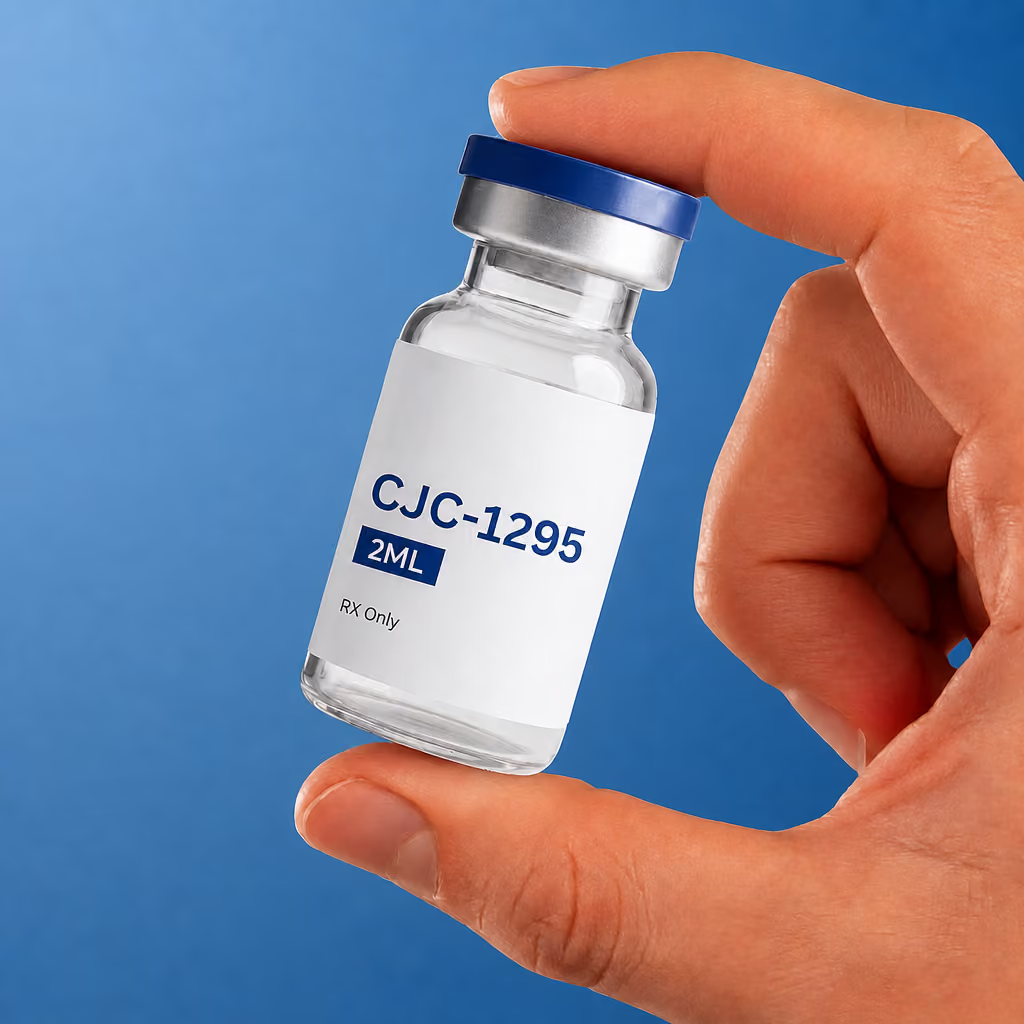
CJC-1295 Injection Supplies Checklist
A complete checklist of the supplies needed for CJC-1295 injections at home, explaining what each item is for, how to choose the right syringes and needles, and how to store and travel with everything safely.
- Use only the medication, water and syringes your prescriber and pharmacy specify.
- A new syringe and needle for every injection is non negotiable.
- Alcohol swabs are for both the vial stopper and your skin; always let them dry.
- An FDA cleared sharps container is the safest way to collect used needles.
- Keep medication refrigerated at 2 to 8°C (36 to 46°F) unless your label says otherwise, and track the temperature.
- A simple dose log helps you, your prescriber and your pharmacy spot problems early.
In this article
Having the right supplies ready makes home injections safer, quicker and less stressful. This checklist covers everything you need for CJC-1295 injections, explains what each item does, and flags the mistakes that cause the most problems. Your pharmacy may supply some items with your prescription; others you may need to buy. If anything on your pharmacy instructions differs from this list, follow your pharmacy. For the injection itself, see our subcutaneous injection technique guide.
CJC-1295 is not approved by the FDA for any use. It is prescribed at a licensed physician's discretion after a medical review. This article is educational and is not medical advice.
The Complete Checklist
| Item | What it is for | Practical tips |
|---|---|---|
| Prescribed CJC-1295 vial | Your medication | Check the label, strength, lot number and expiry date on arrival |
| Bacteriostatic water | Mixing freeze dried powder | Use only what your pharmacy supplies or specifies; it contains a small amount of benzyl alcohol as a preservative |
| Insulin syringes | Measuring and injecting each dose | Use the size your prescriber recommends; one new syringe per injection |
| Mixing syringe | Adding water to the powder | Often a larger syringe; use once and discard |
| Alcohol swabs | Cleaning vial stoppers and skin | Let the alcohol dry fully before injecting |
| Sharps container | Safe disposal of used needles | FDA cleared; replace when about three quarters full |
| Gauze or cotton balls | Gentle pressure after injecting | Press, do not rub |
| Fridge thermometer | Checking storage temperature | Aim for 2 to 8°C (36 to 46°F) |
| Insulated travel case and cold packs | Keeping medication cool away from home | Do not let vials touch ice packs directly |
| Dose log | Recording dates, doses, sites and reactions | Paper or phone; bring it to follow up visits |
What Your Pharmacy Should Include
Pharmacies differ in what they send. Some include syringes, swabs and bacteriostatic water with every order; others send only the medication. When you start, ask exactly what will arrive and what you need to source yourself, so you are not caught short on injection day. Every shipment should come with clear written instructions covering how to mix the vial if needed, how much water to add, how to store it, the beyond use date once mixed, and a phone number for questions. If any of that is missing, ask for it before your first dose.
Your Medication
CJC-1295 is usually supplied as a freeze dried powder in a sealed glass vial that you mix with sterile water before use. When your package arrives, check that the label matches your prescription: the peptide name, strength, whether it is the form with or without DAC, the lot number and the expiry date. The packaging should arrive cool, and the vial should be intact with its seal unbroken. If anything looks wrong, contact the pharmacy before using it, keep the packaging, and do not open or mix the vial until they have advised you what to do.
CJC-1295 should only come from a licensed pharmacy on a valid prescription. It is not FDA approved, and the FDA has noted that compounded drugs containing CJC-1295 may pose risks related to impurities and that clinical data are limited. Products sold online as research chemicals are not made to pharmacy standards and should not be injected.
Bacteriostatic Water
Bacteriostatic water is sterile water with a small amount of benzyl alcohol added to stop bacteria growing. That preservative is what allows a vial to be punctured several times over its use. Use the type and volume your pharmacy specifies. Do not substitute plain sterile water, tap water, saline or any other liquid unless your pharmacist tells you to, because the stability and safety of the mixed solution depend on it. People with a known allergy to benzyl alcohol should tell their prescriber before starting.
Syringes and Needles
Most people use insulin syringes for subcutaneous peptide injections because they are designed for small, precise volumes. A few points matter:
- Markings: U100 insulin syringes are marked so that 100 units equal 1 mL. Make sure the syringe matches the units your dosing instructions use.
- Capacity: 0.3 mL, 0.5 mL and 1 mL syringes are common. A smaller syringe makes small doses easier to read accurately.
- Needle length: short needles of around 6 to 8 millimetres reach the fatty layer under the skin for most adults.
- Needle gauge: a higher gauge number means a thinner needle. Finer needles, such as 30 or 31 gauge, are usually more comfortable.
Some pharmacies also send a larger syringe for adding water to the vial. Whatever you use, every syringe and needle is single use. Reusing them blunts the needle, increases pain and raises the risk of infection.
Frequently Asked Questions
What supplies do I need for CJC-1295 injections?
Pharmacy dispensed CJC-1295, bacteriostatic water if the vial needs mixing, insulin syringes, alcohol swabs, an FDA cleared sharps container, gauze or cotton balls, a fridge thermometer and a dose log. A travel case with cold packs is useful if you travel.
What size needle should I use?
Most adults use short insulin needles of around 6 to 8 millimetres with a fine gauge such as 30 or 31. Use the size your prescriber or pharmacy recommends.
Can I use regular sterile water instead of bacteriostatic water?
Only if your pharmacist tells you to. Bacteriostatic water contains a preservative that allows the vial to be used more than once, and the stability of the mixed solution depends on using the right liquid.
Can I reuse syringes or needles?
No. Every syringe and needle is single use. Reusing them blunts the needle, increases pain and raises the risk of infection.
Where should I store my vials?
In the refrigerator at 2 to 8°C (36 to 46°F), in their box, toward the middle shelf and away from the freezer and door, unless your pharmacy label says otherwise. Never freeze a mixed vial.
How should I dispose of used needles?
Put them straight into an FDA cleared sharps container without recapping. When it is about three quarters full, follow your local guidelines for disposal.
Do I need a dose log?
It is strongly recommended. Recording dates, doses, sites, lot numbers and any reactions helps you rotate sites, avoid missed or double doses, and gives your prescriber useful information.
Alcohol Swabs
Individually wrapped 70% isopropyl alcohol swabs are used to clean the rubber stopper of the vial before every puncture and the skin at the injection site. The alcohol works as it dries, so always wait until both are completely dry before inserting the needle. Injecting through wet alcohol also stings. Use a fresh swab for each step, and keep swabs sealed until use so they do not dry out.
Sharps Container
A sharps container is a rigid, puncture resistant container with a secure lid, designed to hold used needles safely. The FDA advises placing all needles and other sharps in a sharps disposal container immediately after they have been used and following your community guidelines when the container is about three quarters full. FDA cleared containers are sold at pharmacies and online. A small travel size container is useful if you inject away from home. Never put loose needles in the trash or recycling, and never recap a used needle by hand. Our guide on how to dispose of needles and syringes safely explains your disposal options.
Gauze and Cotton Balls
After injecting, a clean piece of gauze or a cotton ball pressed gently on the site for a few seconds can stop a small drop of blood or fluid. Press rather than rub, because rubbing can increase bruising and irritation. Small adhesive bandages are optional.
Storage Supplies
Mixed CJC-1295 is usually kept in the refrigerator. A cheap fridge thermometer lets you check that it stays between 2 and 8°C (36 and 46°F). Store vials in their box toward the middle of the fridge, away from the freezer compartment and the door, where temperatures swing most. Never freeze a mixed vial. Follow the storage instructions and beyond use date on your pharmacy label; our guide to how to store and handle CJC-1295 goes into more detail.
A Travel Kit
If you travel, put together a small kit: an insulated medication case with cold packs, your vial in its labelled box, enough syringes and swabs for every planned dose plus spares, a travel sharps container and a copy of your prescription. Keep the vial from touching ice packs directly, because freezing can damage it. In the United States, the Transportation Security Administration allows medically necessary liquids and accessories such as freezer packs and syringes through security once screened, as long as you declare them. Our guide to traveling with peptides covers the details.
Setting Up a Clean Injection Space
Choose one place for injections, ideally a clean, dry, well lit table or counter away from food preparation and pets. Wipe the surface before you start and lay out everything you need: the vial, a new syringe, two swabs, gauze and the open sharps container within easy reach. Having everything in front of you means you never have to put a ready syringe down on an uncovered surface or search for a swab mid injection. Good light matters too, because insulin syringe markings are small.
Supplies If You Need Extra Help
If you have limited vision, arthritis or a tremor, a few additions can make injections easier and safer. A small magnifier that clips onto a syringe helps you read fine markings. Larger diameter syringes or syringe grips can be easier to hold. Some people find it simpler to have a partner or family member learn to draw up and give the injection. Tell your prescriber or pharmacist about any difficulty; they can suggest options and check that your technique gives you an accurate dose.
A Dose Log
A simple log is one of the most useful things you can keep. Record the date and time of each injection, the dose in units, the site, the vial lot number and any reaction or symptom. It makes rotating sites easy, helps you avoid missed or double doses, and gives your prescriber a clear picture at follow up. It also gives the pharmacy the details they need if there is ever a concern about a product.
A Quick Check Before Every Dose
Before each injection, take thirty seconds to run through the basics. Is the vial within its beyond use date and stored correctly? Is the solution clear? Is the syringe new, sealed and the right type? Do you have two fresh swabs and an open sharps container? Is there space left in the container? Have you noted which site you used last time? This short routine catches most problems before they happen and quickly becomes automatic.
Ordering and Running Out
Check your supplies a week or two before you expect to run out, especially syringes and swabs, which are easy to forget. Ask your prescriber for refills in good time so there is no gap. If you ever run short of syringes, do not reuse one to stretch your supply; contact your pharmacy instead.
Leftover Supplies and Packaging
Unused, sealed syringes and swabs can be kept for future use as long as they are within their expiry dates and stored somewhere clean and dry. Insulated shipping boxes and cold packs can often be reused for travel. Expired or unwanted medication should go back to a pharmacy or a community take back programme rather than into household waste, and used sharps always go into a sharps container.
Common Supply Mistakes
- Using research grade or unlabelled products: only use pharmacy dispensed medication.
- Substituting a different liquid for bacteriostatic water: stability and sterility depend on using the right one.
- Mismatched syringes: using a syringe with different markings from your dosing instructions.
- Reusing needles or syringes: always single use.
- Storing vials in the fridge door or freezer: temperature swings or freezing can damage the peptide.
- Throwing needles in household trash: use a sharps container every time.
If you notice a new reaction or are unsure whether a vial is still usable, our guide to managing common CJC-1295 side effects explains what to watch for and when to call your prescriber.
Conclusion
A complete kit for CJC-1295 injections is simple: pharmacy dispensed medication, the bacteriostatic water and syringes your prescriber specifies, alcohol swabs, an FDA cleared sharps container, gauze, a fridge thermometer, a travel case if you need one, and a dose log. Use every syringe and needle once, check the label on every delivery, let alcohol dry, keep vials cold but never frozen, and dispose of sharps safely every time. If you have questions about any item, your pharmacist is the best person to ask. If you would like to start treatment with a physician who will guide you through setup, you can start your online assessment.
In this article