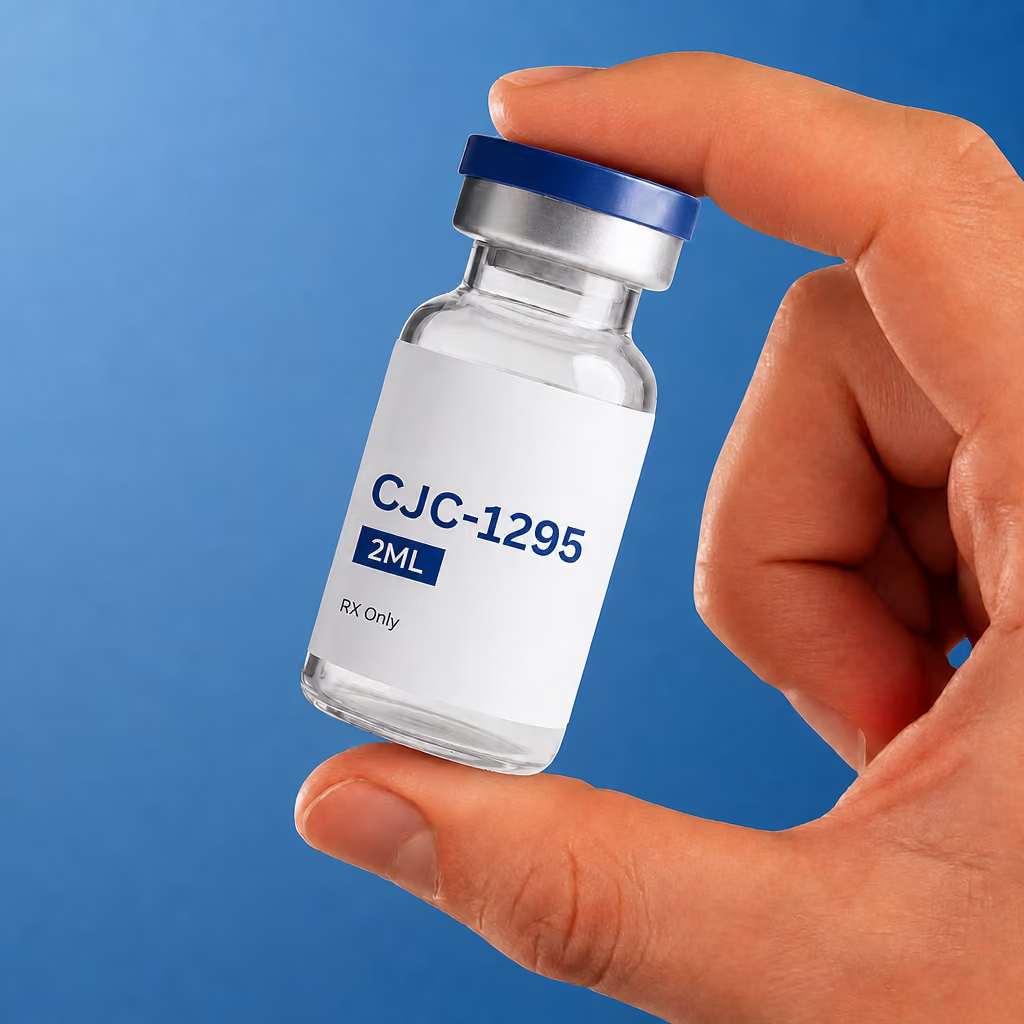
CJC-1295 and Sermorelin Dosing Compared
A practical comparison of how CJC-1295 and sermorelin are dosed and given, explaining why one is injected infrequently and the other daily, how timing and monitoring differ, and what to know about switching between them.
- CJC-1295 with DAC lasts days, with an estimated half life of 5.8 to 8.1 days, so it is injected infrequently.
- Sermorelin is cleared within minutes, so it is usually injected daily, often at bedtime.
- Neither has an FDA approved adult dose; your prescriber sets the dose, schedule and duration.
- Sermorelin was FDA approved in 1997 for children and later withdrawn for reasons other than safety; CJC-1295 was never approved.
- Monitoring for both centres on IGF-1 and glucose.
- Never switch between them, or combine them, without your prescriber.
In this article
CJC-1295 and sermorelin both work on the same switch in the body: the receptor for growth hormone releasing hormone (GHRH) on the pituitary gland. Both prompt your pituitary to release more of your own growth hormone. The big practical difference is how long each lasts, and that drives almost everything about how they are dosed and given. This article compares the two from a dosing and administration point of view. For the full head to head comparison of evidence, safety and who each suits, see our CJC-1295 vs sermorelin guide.
CJC-1295 is not approved by the FDA for any use. It is prescribed at a licensed physician's discretion after a medical review. This article is educational and is not medical advice.
At a Glance
| Feature | CJC-1295 with DAC | Sermorelin |
|---|---|---|
| What it is | Modified GHRH analog bound to albumin | The first 29 amino acids of natural GHRH |
| How long it acts | Days; estimated half life 5.8 to 8.1 days | Minutes; cleared quickly after each injection |
| Typical injection frequency | Infrequent, as set by your prescriber | Usually daily, often at bedtime |
| Growth hormone pattern | Raised baseline with natural pulses preserved in research | A short pulse after each injection |
| FDA history | Never approved; development halted in 2006 | Approved in 1997 for children with growth hormone deficiency; withdrawn for reasons other than safety or effectiveness |
| Human research | Small pharmacology studies in healthy adults | Pediatric approval data and older adult studies |
| Ability to stop quickly | Effects fade over days | Effects fade within hours |
Why CJC-1295 Is Given Infrequently
CJC-1295 with DAC carries a chemical attachment that lets it bind albumin in the blood, which protects it from breakdown. In early animal work it was still present in plasma beyond 72 hours, and in healthy adults its estimated half life was 5.8 to 8.1 days. A single injection raised growth hormone for six days or more and IGF-1 for nine to eleven days. The human trials gave repeated doses weekly or every other week. That long action is why CJC-1295 with DAC is prescribed for infrequent injection rather than daily use.
There is no FDA approved dose of CJC-1295. The published studies dosed by body weight, mainly 30 or 60 mcg per kg, over a few weeks. Your prescriber chooses your dose and schedule based on your history and lab results.
Why Sermorelin Is Given Daily
Sermorelin is a shorter peptide made of the first 29 amino acids of natural GHRH, without the albumin attachment. It is cleared from the blood within minutes, so each injection produces a short pulse of growth hormone release. To keep stimulating the pituitary, it is usually prescribed as a daily injection, often at bedtime, when the body's natural growth hormone release is highest.
Sermorelin has a different regulatory history from CJC-1295. It was approved by the FDA as Geref in 1997 for children with growth hormone deficiency, and was later discontinued by the manufacturer. In 2013 the FDA determined that it was not withdrawn from sale for reasons of safety or effectiveness. Adult use today is off label and prescribed at a physician's discretion.
Timing of Injections
For sermorelin, timing matters more because each dose acts briefly. Bedtime dosing is common because it aligns the short pulse with the body's natural nighttime growth hormone release. For CJC-1295 with DAC, the amount in the blood changes slowly across the week, so the exact time of day matters much less. The best time is the one your prescriber recommends and that you can stick to consistently. If you notice flushing after injections, a time when you can rest for a while may be more comfortable.
Frequently Asked Questions
Why is CJC-1295 injected less often than sermorelin?
CJC-1295 with DAC binds albumin in the blood and has an estimated half life of 5.8 to 8.1 days, so it keeps working for days. Sermorelin is cleared within minutes, so it is usually injected daily.
What is the dose of CJC-1295 compared with sermorelin?
Neither has an FDA approved adult dose. Published CJC-1295 studies used weight based doses of 30 to 60 mcg per kg. Your prescriber sets the dose and schedule for either medicine.
Should I inject at bedtime?
Bedtime is common for sermorelin because it acts briefly and aligns with natural nighttime growth hormone release. For CJC-1295, timing matters less; use the time your prescriber recommends and can stick to.
Was sermorelin FDA approved?
Yes. Sermorelin was approved as Geref in 1997 for children with growth hormone deficiency and was later discontinued. The FDA determined it was not withdrawn for safety or effectiveness reasons. CJC-1295 has never been approved.
Can I switch from sermorelin to CJC-1295?
Only with a plan from your prescriber, including when to stop one and start the other and when to repeat labs, because CJC-1295 lasts days.
Can I take CJC-1295 and sermorelin together?
Combining them is not supported by published research and makes IGF-1 harder to predict. Only do so if your prescriber has a specific reason and monitors you closely.
How are both medicines monitored?
With IGF-1 to check the growth hormone response and fasting glucose or HbA1c, plus other tests based on your history.
How the Injection Itself Is Given
Both are given as subcutaneous injections into the fatty layer under the skin, usually of the abdomen, thighs or upper arms, using insulin syringes. The technique is the same: clean hands, a fresh needle every time, an alcohol swabbed site that has dried, a pinched fold of skin, a slow injection and immediate disposal of the syringe in a sharps container. Our subcutaneous injection technique guide covers each step. With daily sermorelin, site rotation matters even more because you inject so often.
Mixing and Measuring
Both are often supplied as powder that you mix with bacteriostatic water. The arithmetic is identical: concentration equals the amount in the vial divided by the water added, and the volume to draw equals your dose divided by the concentration. The amounts differ, so never use one product's numbers for the other. Our CJC-1295 dosage calculator and mixing chart walks through the calculation with examples.
Monitoring
Monitoring for both centres on the same labs. IGF-1 shows how the growth hormone system is responding and is kept within a safe range for your age and sex. Fasting glucose or HbA1c is checked because growth hormone can raise blood sugar. Your prescriber may add other tests based on your history. With CJC-1295, because each dose lasts about a week, the timing of a blood test relative to your last injection can affect the IGF-1 result, so your prescriber may ask you to test on a particular day.
Side Effects and the Practical Difference
Both can cause injection site reactions and effects associated with raised growth hormone, such as fluid retention, joint aches or changes in blood sugar. The FDA has cited serious adverse events including increased heart rate and systemic vasodilatory reaction with CJC-1295, and its only larger trial was halted in 2006 after a participant died. One practical difference matters here: if a problem develops with sermorelin, stopping it means the effect fades within hours. With CJC-1295, effects fade over days. That is one reason some prescribers prefer a shorter acting option for people who need closer control. Our guide to CJC-1295 side effects and safety has the details.
Missed Doses
With daily sermorelin, a missed dose simply means one night without the extra pulse; most prescribers advise skipping it and continuing the next day rather than doubling up. With CJC-1295, because each dose lasts days, a missed dose is rarely urgent, but you should contact your prescriber for advice rather than taking two doses close together. Either way, a dose log helps prevent missed and double doses.
Switching Between Them
Some people move from one to the other, for example from daily sermorelin to less frequent CJC-1295 for convenience, or from CJC-1295 to sermorelin for tighter control. A switch should always be planned by your prescriber, including when to take the last dose of one and the first of the other, and when to repeat labs. Because CJC-1295 lasts days, starting another growth hormone releasing medicine too soon could raise IGF-1 more than intended.
Combining Them
Combining two medicines that act on the same receptor is not supported by published research, and it makes the effect on IGF-1 harder to predict. Do not combine CJC-1295 and sermorelin unless your prescriber has a specific reason and monitors you closely. Our article on combining CJC-1295 with other peptides explains the issues in more detail.
Which Schedule Suits You?
For some people, fewer injections are the deciding factor; for others, the ability to stop quickly or a longer regulatory history matters more. Neither has published evidence of benefits for sleep, energy or body composition in healthy adults that would make one clearly better. The choice is best made with your prescriber after a full review of your history and goals, including your other medicines and any conditions that affect growth hormone or blood sugar.
Conclusion
CJC-1295 with DAC and sermorelin act on the same pituitary receptor but behave very differently in practice. CJC-1295 lasts days and is injected infrequently; sermorelin is cleared within minutes and is usually injected daily, often at bedtime. Both are given subcutaneously, mixed and measured the same way, and monitored with IGF-1 and glucose. Neither has an FDA approved adult dose, so dosing, switching and any combination should always be decided by your prescriber. If you would like a physician to help you choose and supervise treatment, you can start your online assessment.
In this article