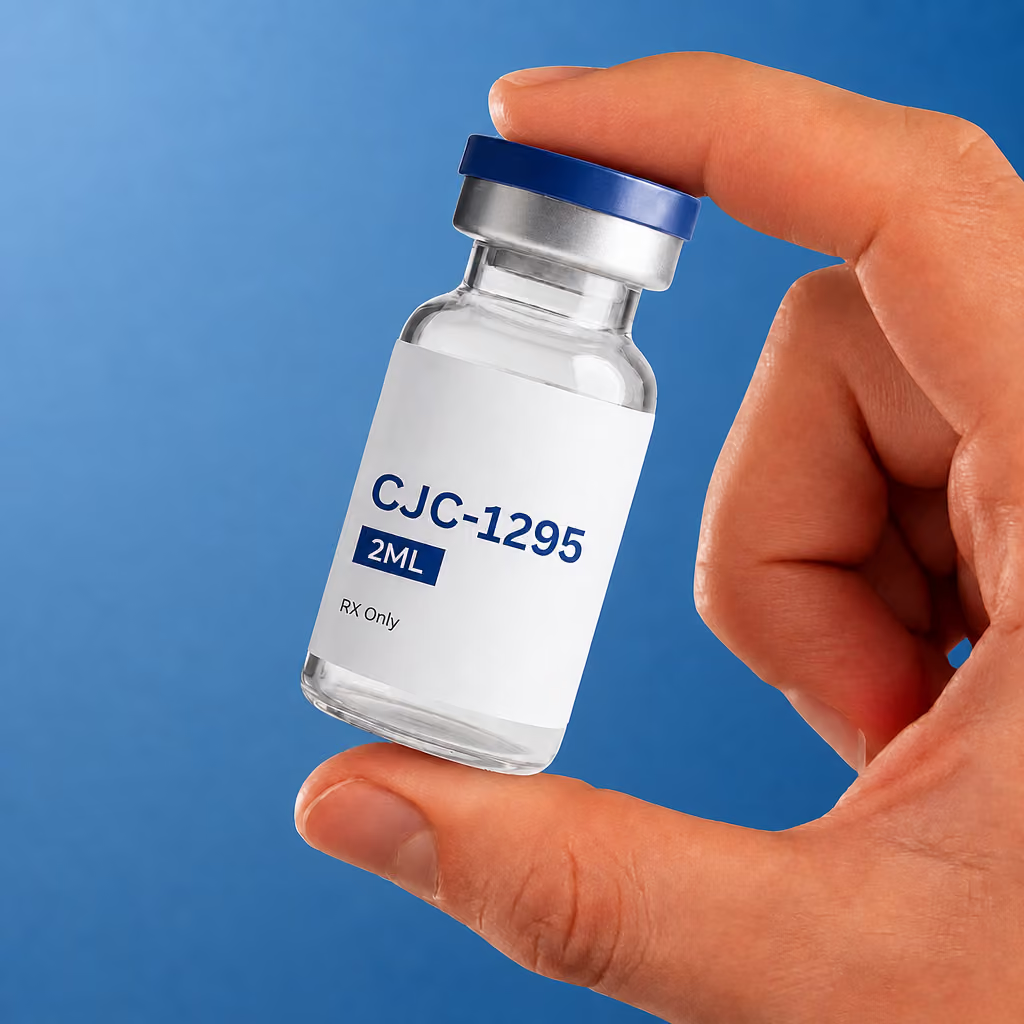
Managing Common CJC-1295 Side Effects
A practical guide to recognizing and managing the most common CJC-1295 side effects, what the research actually reports, and the warning signs that need prompt medical attention.
- Published human studies describe CJC-1295 as relatively well tolerated over short periods, but long term safety data does not exist.
- The FDA has cited serious adverse events including increased heart rate and systemic vasodilatory reactions.
- Most day to day issues are local: redness, itching or a small lump where you inject.
- Flushing, warmth, headache and lightheadedness tend to appear soon after a dose and usually settle.
- Effects linked to higher growth hormone, such as fluid retention, joint aches or tingling hands, should be reported to your prescriber.
- Chest pain, a racing heartbeat that does not settle, fainting or swelling of the face or throat need emergency care.
In this article
Most people who start CJC-1295 want to know two things before their first injection: what side effects are likely, and what to do if one appears. This guide answers both in practical terms. It covers the reactions people most often notice, simple ways to reduce them, and the warning signs that mean you should stop and call for help. For the complete overview of every reported risk, including rare ones and who should avoid treatment, see our CJC-1295 side effects and safety guide.
CJC-1295 is not approved by the FDA for any use. It is prescribed at a licensed physician's discretion after a medical review. This article is educational and is not medical advice.
What the Research Says About CJC-1295 Side Effects
The human evidence on CJC-1295 is small. In two placebo controlled dose escalation studies in healthy adults aged 21 to 61, researchers reported that CJC-1295 was safe and relatively well tolerated, particularly at doses of 30 or 60 mcg per kg. A second study in healthy young men looked at how growth hormone is released after an injection and found that the normal pulsing pattern of growth hormone was preserved during continuous stimulation. Both studies were short and involved a few dozen people, so they cannot tell us about rare reactions or effects that only show up after months of use.
Two further facts belong in any honest discussion of safety. First, the FDA has stated that it identified serious adverse events associated with CJC-1295, including increased heart rate and systemic vasodilatory reaction, and that available clinical data are limited. Second, a larger Phase II trial in people with HIV associated abdominal fat was halted in 2006 after a participant died. The trial physician considered the death most likely due to undiagnosed heart disease rather than the drug, but the development program did not continue and CJC-1295 was never approved. None of this means a given person will have a serious reaction. It does mean that monitoring matters, and that you should know what to watch for.
Injection Site Reactions
The most common issue with any peptide given under the skin is a local reaction where the needle went in. You may notice redness, mild itching, a small raised bump or slight tenderness for a few hours to a day. These reactions usually settle on their own.
Simple habits make them less likely:
- Rotate sites: move between the abdomen, the outer thighs and the back of the upper arms, and keep each new injection a few centimetres away from the last one.
- Let the solution reach room temperature: take the vial out of the fridge a few minutes before drawing your dose, because cold liquid can sting.
- Let alcohol dry: inject only after the alcohol swab has fully dried on the skin.
- Use a fresh needle every time: a needle that has been pushed through the vial stopper is duller and can irritate the skin.
- Inject slowly and steadily: rushing the plunger can cause more discomfort.
Our step by step subcutaneous injection technique guide walks through each of these in detail. A cool compress for ten minutes can ease tenderness. Call your prescriber if redness spreads, the area becomes hot and painful, you see pus, or you develop a fever, because these can be signs of infection.
Flushing, Warmth and Lightheadedness
Because the FDA has noted vasodilatory reactions with CJC-1295, it is worth knowing what that can feel like. Vasodilation means blood vessels widen. People describe it as a sudden feeling of warmth, redness in the face and neck, a pounding sensation, or feeling lightheaded when standing up. When it happens, it usually starts soon after an injection.
If you feel flushed or lightheaded, sit or lie down until it passes, drink some water, and avoid driving or using machinery until you feel normal. Make a note of when it started and how long it lasted. Tell your prescriber about any episode, even a mild one, because the timing and severity help them decide whether your dose or schedule should change. A racing heartbeat that does not settle within a few minutes, chest pain or fainting is not something to manage at home.
Frequently Asked Questions
How common are side effects with CJC-1295?
The published human studies were small and short, so exact rates are not known. Researchers described CJC-1295 as relatively well tolerated in healthy adults, and the most common issues people notice are local reactions at the injection site, flushing and headache.
What does a vasodilatory reaction feel like?
Vasodilation means blood vessels widen. It can feel like sudden warmth, redness in the face and neck, a pounding sensation or lightheadedness, usually soon after an injection. Sit or lie down until it passes and tell your prescriber. Get emergency care for chest pain, fainting or a heartbeat that does not settle.
How can I reduce injection site reactions?
Rotate injection sites, let the solution reach room temperature, wait for the alcohol swab to dry, use a fresh needle and inject slowly. A cool compress can ease tenderness. Spreading redness, heat, pus or fever may mean infection and needs a call to your prescriber.
Can CJC-1295 affect blood sugar?
Yes. CJC-1295 raises growth hormone, and growth hormone can make the body less sensitive to insulin. If you have diabetes or prediabetes, your prescriber should check your glucose before and during treatment and review any diabetes medicines you take.
Should I stop CJC-1295 if I get a side effect?
Do not change your dose on your own. For mild effects, contact your prescriber, who can review your symptoms and labs. For chest pain, fainting, a racing heartbeat that does not settle, or swelling of the face or throat, stop and seek emergency care immediately.
Is there long term safety data for CJC-1295?
No. The human studies lasted weeks, and the only larger trial was halted in 2006. This is why regular lab monitoring and reporting any new symptoms to your prescriber are so important.
Where can I report a side effect?
Tell your prescriber first. You can also report it to the FDA through the MedWatch program online or by phone. Our guide on how to report peptide side effects explains what details to include.
Headache, Nausea and Tiredness
Some people report a mild headache, slight nausea or tiredness in the first days after starting treatment. These effects are not specific to CJC-1295 and can have many causes, so it helps to keep a simple log of your injection times and how you feel. Staying well hydrated, eating regular meals and keeping a consistent sleep routine are reasonable first steps. If a headache is severe, comes with vision changes, or keeps coming back, contact your prescriber rather than reaching for higher doses of pain relievers.
Effects Linked to Higher Growth Hormone
CJC-1295 works by prompting your pituitary gland to release more of your own growth hormone, which in turn raises IGF-1. In healthy adults, a single dose raised growth hormone two to tenfold for six days or more and IGF-1 one and a half to threefold for nine to eleven days. Effects that are recognised with raised growth hormone in general are therefore possible, even though CJC-1295 trials were too small and short to measure how often they occur. They include:
- Fluid retention: mild puffiness in the hands, feet or face.
- Joint or muscle aches: a dull ache, often in the hands or knees.
- Tingling or numbness in the hands: sometimes worse at night, which can be a sign of nerve compression at the wrist.
- Changes in blood sugar: growth hormone can make the body less sensitive to insulin.
None of these should be ignored or treated as something to push through. They are reasons to contact your prescriber, who may check your IGF-1 and fasting glucose and adjust or pause treatment. If you take medication for diabetes, read our guide to CJC-1295 drug interactions and contraindications before you start.
When to Call Your Prescriber
Contact the clinician who prescribed your treatment within a day or two if you notice any of the following:
- Injection site redness that spreads, feels hot or does not improve after two days.
- Repeated flushing or lightheadedness after doses.
- Swelling in the hands, feet or face that persists.
- Joint pain, hand tingling or numbness that is new since you started.
- Higher than usual blood sugar readings if you monitor at home.
- Headaches that are frequent or worse than you would expect.
Never change your dose on your own. Your prescriber can review your symptoms alongside your lab results and decide whether to continue, adjust or stop. Our guide on how to report peptide side effects explains what details to have ready and how to file a report with the FDA.
When to Get Emergency Care
Call emergency services or go to the nearest emergency department straight away if you have:
- Chest pain or pressure.
- A fast or irregular heartbeat that does not settle within a few minutes.
- Fainting or near fainting.
- Swelling of the face, lips, tongue or throat, or difficulty breathing.
- A widespread rash with hives soon after an injection.
Bring the vial or your prescription details with you so the treating team knows exactly what you took and when.
Missed Doses and Accidental Double Doses
Because CJC-1295 keeps working for about a week after each injection, a missed dose is rarely urgent. If you realise you missed one, contact your prescriber for instructions rather than guessing. Do not take two doses close together to catch up, because that raises growth hormone and IGF-1 further than intended and makes side effects such as flushing, fluid retention or blood sugar changes more likely.
If you inject more than prescribed by mistake, call your prescriber the same day and describe exactly how much you took and when. Watch closely for flushing, a fast heartbeat, lightheadedness or swelling over the following days, and get emergency care for chest pain, fainting or a heartbeat that does not settle. Keeping a written dose log, and marking your injection day on a calendar, is the simplest way to avoid both problems.
Monitoring That Keeps Treatment Safer
Because long term safety data does not exist, regular monitoring is the main safeguard. Most prescribers check a baseline set of labs before treatment and repeat them during therapy. These commonly include IGF-1, fasting glucose or HbA1c, and other tests chosen for your history. Ask your prescriber how often your labs will be repeated and which result would lead them to change your plan. Keeping your own record of doses, symptoms and lab results makes these conversations quicker and more useful. You can learn more about which measurements matter in our guide to tracking CJC-1295 progress.
Monitoring also covers your other medicines and supplements. Tell your prescriber whenever you start, stop or change anything else, including over the counter products, because some can affect blood sugar, blood pressure or hormone levels. Plan ahead for travel, illness or surgery as well. If you develop a fever or an infection, or are scheduled for a procedure, ask whether you should pause injections until you recover.
Conclusion
Most side effects people notice with CJC-1295 are local and manageable: redness or a small bump at the injection site, short episodes of flushing or warmth, and occasional headache. Careful injection technique, rotating sites and keeping a simple symptom log go a long way. At the same time, the evidence base is small, the FDA has cited increased heart rate and vasodilatory reactions, and the only large trial was stopped, so any heart symptoms, fainting or allergic signs need emergency care, and persistent swelling, joint pain or blood sugar changes need a call to your prescriber. If you are considering treatment under a physician's supervision, you can start your online assessment.
In this article