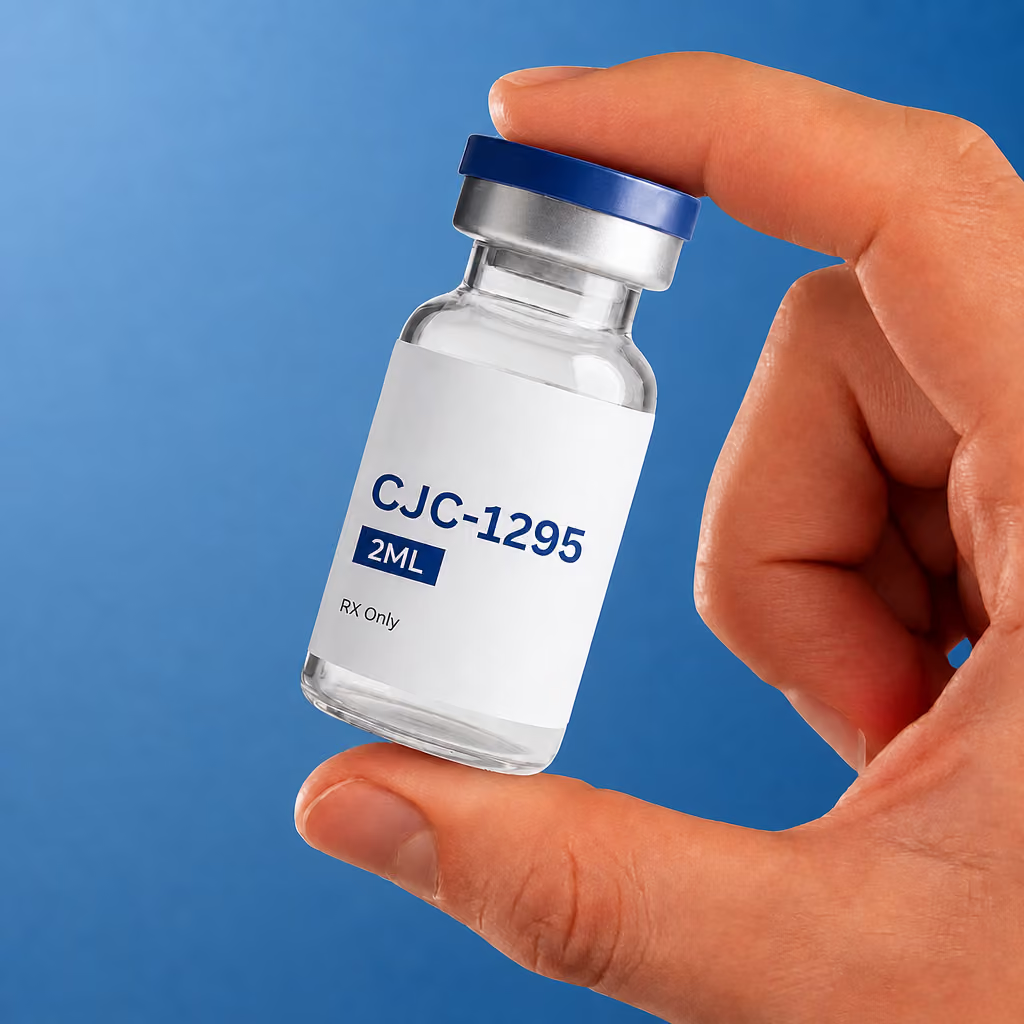
Tracking CJC-1295 Progress: Labs and Timelines
A practical guide to tracking CJC-1295 treatment, covering which labs your prescriber checks and when, how to keep a dose and symptom log, how to measure personal goals honestly, and what the evidence says about timelines.
- IGF-1 is the main lab measure of how your growth hormone system is responding.
- In research, IGF-1 rose for nine to eleven days after a single dose and stayed above baseline with repeated doses.
- No published CJC-1295 study measured sleep, energy, body composition or a results timeline.
- A simple log of doses, sites, symptoms and personal goals is the best way to judge whether treatment helps you.
- Glucose and, where advised, blood pressure and heart rate should be tracked for safety.
- If there is no meaningful benefit after a reasonable trial, stopping is a sensible option.
In this article
Tracking your progress on CJC-1295 serves two purposes. It shows your prescriber how your body is responding, so the dose stays effective and safe, and it gives you an honest picture of whether treatment is doing what you hoped. This guide explains what to measure, how often, and what the evidence does and does not say about timelines. For the way your prescriber uses these measurements, see our article on how physicians evaluate CJC-1295 therapy.
CJC-1295 is not approved by the FDA for any use. It is prescribed at a licensed physician's discretion after a medical review. This article is educational and is not medical advice.
What the Research Measured
The published human research on CJC-1295 tracked hormone levels. In healthy adults, a single injection raised growth hormone for six days or more and IGF-1 for nine to eleven days, and with repeated doses IGF-1 stayed above baseline for up to 28 days. A second study found that natural growth hormone pulses were preserved while trough levels rose.
Just as importantly, no published CJC-1295 study measured sleep, energy, mood, strength, muscle, fat or skin, and none set out a timeline for those changes. Websites that promise better sleep in two weeks or body composition changes in three months are not drawing on CJC-1295 research. That is why personal tracking matters: it is the only way to see whether treatment helps you specifically.
Lab Tests
IGF-1 is the main lab marker. Because growth hormone itself rises and falls in pulses, a single growth hormone reading is unreliable, whereas IGF-1 is stable through the day. Your prescriber will usually measure IGF-1 before you start, again after several weeks of treatment, and then at regular intervals. The goal is a level within a safe range for your age and sex, not the highest possible number. Our guide to how CJC-1295 affects GH and IGF-1 levels explains why.
Fasting glucose or HbA1c is checked because growth hormone can make the body less sensitive to insulin. Other tests, such as thyroid function, lipids, and kidney and liver function, may be added based on your history.
Because CJC-1295 lasts about a week, the timing of a blood test in relation to your last injection can affect the IGF-1 result. Your prescriber may ask you to test on a particular day of your dosing cycle so results are comparable over time.
Your Tracking Dashboard
| What to track | How | Why it matters |
|---|---|---|
| IGF-1 | Blood test before treatment and at intervals your prescriber sets | The main lab measure of how the growth hormone system is responding |
| Fasting glucose or HbA1c | Blood test | Growth hormone can raise blood sugar |
| Other labs your prescriber orders | Blood tests based on your history | Catch problems early and guide decisions |
| Doses and injection sites | Dose log | Avoid missed or double doses; rotate sites |
| Symptoms and side effects | Short notes after each dose | Spot patterns such as flushing, swelling or joint aches |
| Sleep and energy | Simple daily ratings | Personal goals that research has not measured |
| Weight and waist | Weekly, same time and conditions | Context for any body composition goals |
| Blood pressure and heart rate | Home monitor if advised | The FDA has cited increased heart rate with CJC-1295 |
Keeping a Dose and Symptom Log
A dose log is the backbone of good tracking. For each injection, record:
- The date and time.
- The dose in units and the vial concentration.
- The injection site.
- The vial lot number, when you start a new vial.
- Any reaction or symptom in the following days, with a rating of how strong it was.
Patterns are easier to spot when written down. Flushing after every dose, swelling that builds over weeks, or joint aches that appear after a dose change are all useful for your prescriber. Our guide to managing common CJC-1295 side effects explains which symptoms need a call.
Frequently Asked Questions
Which lab tests track CJC-1295 progress?
IGF-1 is the main marker of how the growth hormone system is responding. Fasting glucose or HbA1c is also checked, and your prescriber may add tests such as thyroid function, lipids, and kidney and liver function.
How soon will IGF-1 rise on CJC-1295?
In research on healthy adults, IGF-1 rose for nine to eleven days after a single dose and stayed above baseline with repeated doses. Your prescriber will confirm your response with a blood test after several weeks.
How long until I notice results?
There is no evidence based timeline. No published CJC-1295 study measured sleep, energy or body composition, so any change is individual. Track a baseline and trends to judge your own response.
What should I record in my dose log?
The date and time, dose in units and vial concentration, injection site, vial lot number and any symptoms or reactions with a rating of how strong they were.
Should I monitor my heart rate or blood pressure?
If your prescriber advises it. The FDA has cited increased heart rate with CJC-1295. Seek urgent care for chest pain, fainting or a racing heartbeat that does not settle.
When should I consider stopping CJC-1295?
If side effects are troublesome, IGF-1 or glucose moves outside the safe range, a new health issue appears, or there is no meaningful benefit after a reasonable trial. Decide together with your prescriber.
Tracking Personal Goals Honestly
Most people start CJC-1295 for reasons such as sleep, energy, recovery or body composition. Because research has not measured these outcomes, your own records are the only evidence for whether they change. A few principles make that evidence more trustworthy:
- Start before your first dose: record two weeks of baseline so you have something to compare against.
- Use simple, consistent measures: for example, rate sleep quality and afternoon energy from one to ten each day.
- Measure the same way each time: weigh yourself and measure your waist at the same time of day, under the same conditions.
- Keep other things steady: big changes in diet, training, caffeine or alcohol make it hard to tell what caused any change.
- Look at trends, not single days: compare weekly averages rather than reacting to one good or bad night.
Expect that some measures may not change. That is a valid result, and it is useful information for deciding whether treatment is worthwhile for you.
Safety Measures
The FDA has cited serious adverse events including increased heart rate and systemic vasodilatory reaction with CJC-1295. If your prescriber advises it, check your resting heart rate and blood pressure at home on a regular schedule and note them in your log. Seek urgent care for chest pain, fainting or a racing heartbeat that does not settle. If you monitor your blood sugar at home, share any readings that are higher than usual.
What Changes, and When
Based on the research, the measurable changes are hormonal and appear quickly: growth hormone rises within days of an injection and IGF-1 climbs over the following week or so. Anything beyond that is individual and uncertain. A reasonable way to think about timing is:
- First weeks: watch for side effects and confirm your technique and schedule are working.
- First follow up labs: confirm IGF-1 has risen into the intended range and glucose is stable.
- After a reasonable trial: review your log with your prescriber and decide together whether the changes you have seen justify continuing.
There is no evidence based number of weeks after which particular benefits should appear. If someone promises one, treat it as marketing rather than medicine.
Bringing It Together at Follow Up
Before each follow up appointment, summarise your log: your doses, any missed or late injections, side effects, average sleep and energy ratings, and any measurements you track. Bring your latest lab results or make sure your prescriber has them. A clear summary makes the appointment faster and leads to better decisions.
When to Reconsider Treatment
It is reasonable to pause or stop CJC-1295 if side effects are troublesome, if IGF-1 or glucose moves outside the safe range, if a new health issue appears, or if there is no meaningful benefit after a reasonable trial. Our guide on who should not use CJC-1295 lists conditions that would make continuing inadvisable. Stopping is a normal part of careful treatment, not a failure.
Tools That Make Tracking Easier
You do not need anything elaborate. A notebook, a simple spreadsheet or a notes app works well. Some people use a habit tracker app for doses and a separate sheet for weekly measurements. If you use a wearable for sleep or heart rate, treat the numbers as rough guides rather than precise measurements, and focus on trends. The key is consistency: a simple system you keep up for months is far more useful than a detailed one you abandon after two weeks. Our CJC-1295 dosage guide explains how dosing schedules usually work, which helps you set up your log.
Conclusion
Tracking CJC-1295 well means combining your prescriber's lab tests, chiefly IGF-1 and glucose, with your own simple log of doses, sites, symptoms and personal goals. Research shows CJC-1295 raises growth hormone and IGF-1 within days, but it has not measured sleep, energy, body composition or any results timeline, so your own records are the only way to judge whether treatment helps you. Record a baseline, measure consistently, look at trends and review them honestly with your prescriber. If you would like to start treatment with a physician who monitors you closely, you can start your online assessment.
In this article