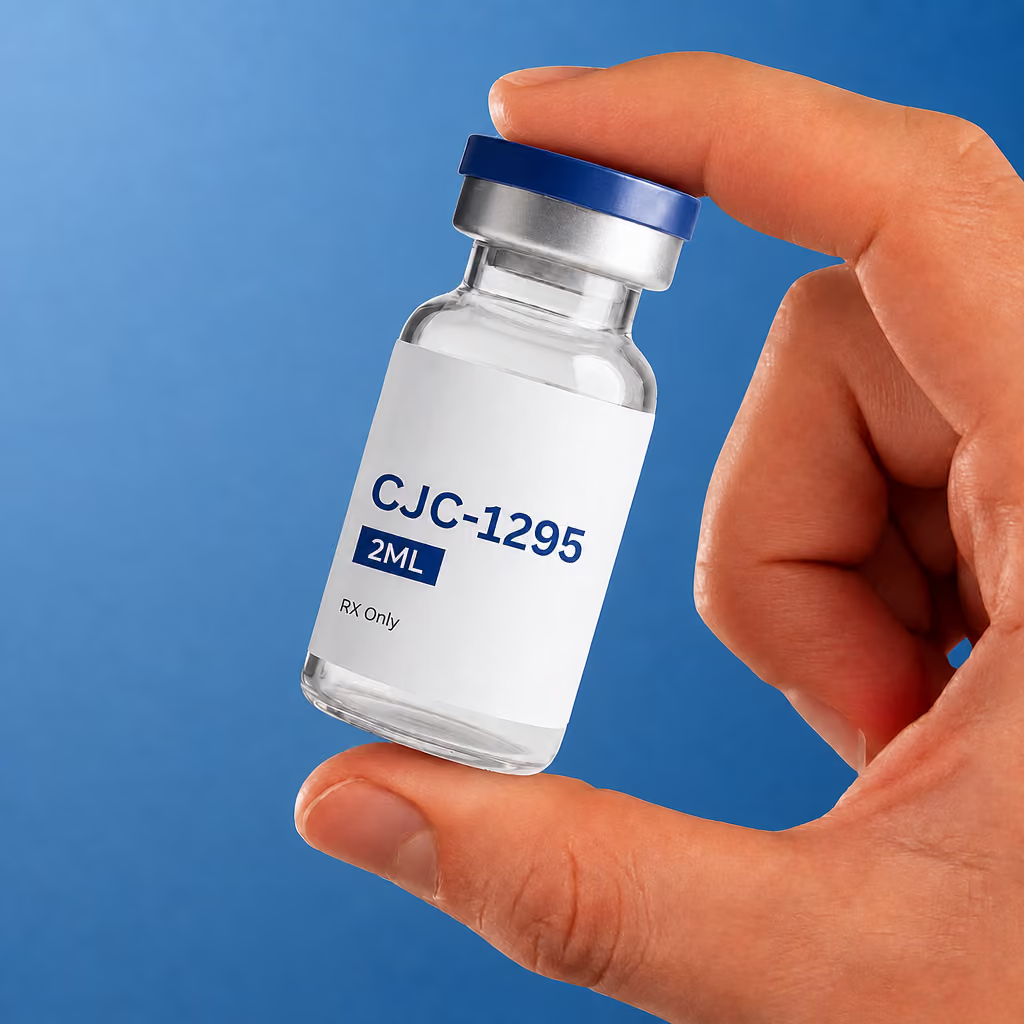
How Physicians Evaluate CJC-1295 Therapy
A step by step look at how a careful physician decides whether CJC-1295 is appropriate, from the first consultation and baseline labs to follow up monitoring and when treatment should stop.
- A responsible prescriber assesses your history, medicines, goals and labs before prescribing CJC-1295.
- Baseline tests commonly include IGF-1 and fasting glucose or HbA1c, plus others based on your history.
- Active cancer, pregnancy, breastfeeding and competitive sport rule CJC-1295 out.
- Because CJC-1295 is not FDA approved and data are limited, physicians explain the uncertainty openly.
- Follow up visits review symptoms, labs and whether treatment is still worthwhile.
- Any service that prescribes without a proper assessment is a red flag.
In this article
CJC-1295 is a prescription treatment, so whether it is right for you should be decided by a physician who has looked carefully at your health. This article explains what that evaluation should involve, step by step, so you know what to expect and can recognise a service that cuts corners. An earlier version of this page presented quotes as expert interviews without identifying the physicians involved. We have replaced it with a clear description of the clinical process instead. For background on the treatment itself, see our guide to what CJC-1295 is.
CJC-1295 is not approved by the FDA for any use. It is prescribed at a licensed physician's discretion after a medical review. This article is educational and is not medical advice.
Why a Careful Evaluation Matters
Three facts shape how carefully a physician should approach CJC-1295. First, it is long acting: a single injection raised growth hormone for six days or more and IGF-1 for nine to eleven days in healthy adults, so its effects cannot be switched off quickly. Second, the evidence is limited. The FDA states that available clinical data are limited and has cited serious adverse events including increased heart rate and systemic vasodilatory reaction. Third, the only larger clinical trial was halted in 2006 after a participant died, and CJC-1295 was never approved. A good evaluation is how a physician makes sure the people most likely to be harmed are not treated, and that everyone else understands what is and is not known.
Step 1: Your Goals and Expectations
A careful consultation starts by asking what you hope to achieve. Common reasons include energy, sleep, recovery, body composition and healthy aging. A physician should explain honestly that published CJC-1295 research measured hormone levels rather than these outcomes, as summarised in our review of CJC-1295 clinical studies. They should also ask whether there are simpler explanations for your symptoms, such as poor sleep, thyroid problems, low iron, low mood or the effects of other medicines, because treating those can matter more than any peptide.
Step 2: Your Medical History
Next comes a detailed history. Expect questions about:
- Cancer: any current diagnosis, past treatment or pending tests, and family history.
- Heart and blood vessels: heart disease, rhythm problems, high blood pressure, fainting or chest pain.
- Metabolism: diabetes, prediabetes or past high blood sugar readings.
- Hormones: pituitary, thyroid or adrenal conditions, and any hormone treatments.
- Other conditions: kidney or liver disease, sleep apnea, joint problems, carpal tunnel syndrome and eye disease.
- Reproductive plans: pregnancy, plans to conceive or breastfeeding.
- Sport: whether you compete in any sport that follows anti doping rules.
Honest answers protect you. Leaving something out does not make treatment safer; it just means the physician cannot account for the risk.
Step 3: Your Medicines and Supplements
The physician should review everything you take, including prescription medicines, over the counter products and supplements. Diabetes medicines, thyroid replacement, glucocorticoids, estrogen and other hormone treatments are particularly relevant, because growth hormone can change how they work. Our guide to CJC-1295 drug interactions and contraindications explains why.
Frequently Asked Questions
What happens during a CJC-1295 consultation?
A careful physician asks about your goals, medical history, medicines and supplements, orders baseline labs, explains whether CJC-1295 is appropriate and why, discusses alternatives, and sets out a follow up plan.
Which lab tests are done before CJC-1295?
Baseline tests commonly include IGF-1 and fasting glucose or HbA1c, with others such as thyroid function, lipids, and kidney and liver tests based on your history.
Who will a physician not prescribe CJC-1295 to?
People with active cancer, those who are pregnant or breastfeeding, anyone with a known allergy, people under 18 and competitive athletes. A history of cancer, heart disease, uncontrolled diabetes or pituitary conditions needs specialist review.
How often will I be monitored on CJC-1295?
Follow up commonly includes repeat IGF-1 and glucose after several weeks of treatment and then at regular intervals, plus reviews of side effects and whether treatment is still worthwhile.
Can CJC-1295 be combined with other treatments?
Only if your physician has planned it. Combining CJC-1295 with other growth hormone products or secretagogues makes the effect on IGF-1 harder to predict and raises the risk of side effects.
When will a physician stop CJC-1295?
If serious side effects occur, IGF-1 rises too high, blood sugar worsens, a new contraindication appears, or there is no meaningful benefit after a reasonable trial.
How can I tell if a peptide service is trustworthy?
Look for a full medical history, baseline labs, honest discussion of the limited evidence, a licensed pharmacy with labelled products, and a clear follow up and side effect plan. Avoid services that promise results or skip assessment.
Step 4: Baseline Lab Tests
Before prescribing, a careful physician orders baseline blood tests. These commonly include:
- IGF-1: to know your starting level, so the effect of treatment can be measured and kept within a safe range.
- Fasting glucose or HbA1c: because growth hormone can raise blood sugar.
- Other tests based on your history: for example thyroid function, a lipid panel, kidney and liver function, or tests requested by a specialist.
Some physicians also check blood pressure and heart rate at baseline, given the FDA's note about increased heart rate. The exact panel varies, but treatment without any baseline testing is a warning sign.
Step 5: Deciding Whether CJC-1295 Is Appropriate
With your goals, history, medicines and labs in hand, the physician makes a recommendation. Some situations rule CJC-1295 out entirely: active cancer, pregnancy or breastfeeding, a known allergy, being under 18, and competing in tested sport, where CJC-1295 is prohibited at all times under the World Anti-Doping Agency code. Others, such as a past history of cancer, heart disease, uncontrolled diabetes or pituitary conditions, need specialist input and often lead to a recommendation against treatment. Our guide on who should not use CJC-1295 covers each group.
A good physician will also discuss alternatives, including shorter acting options such as sermorelin and lifestyle changes. You should leave the consultation understanding why CJC-1295 is or is not being recommended for you.
Step 6: Informed Consent
If CJC-1295 is offered, the physician should explain clearly that it is not FDA approved, that the evidence comes from small short studies, that long term safety is unknown, and what side effects to watch for. They should give you written instructions on dosing, injection technique, storage and what to do if a problem occurs. You should have the chance to ask questions and to decide without pressure.
Step 7: Prescription and Pharmacy
The prescription should go to a licensed pharmacy, and the product you receive should carry a pharmacy label with the name, strength, lot number and storage instructions. Be cautious of any source that sells CJC-1295 without a prescription or labels it for research use only. Products sold that way have not been prepared under pharmacy standards and may contain the wrong amount of peptide or impurities. Your physician or pharmacist should also explain how to store the product, how long it lasts once mixed, and what it should look like, so you can spot a problem before you inject.
Questions to Ask at Your Consultation
You are entitled to understand the reasoning behind any prescription. Useful questions include:
- Why do you think CJC-1295 is appropriate for my goals, and what are the alternatives?
- What does the evidence actually show, and what is still unknown?
- Which of my conditions or medicines are you most cautious about?
- Which lab tests are you ordering now, and when will they be repeated?
- What side effects should make me call you, and what should make me seek emergency care?
- How will we decide whether treatment is working, and when we should stop?
A physician who welcomes these questions and answers them plainly is a good sign.
Step 8: Follow Up Monitoring
Evaluation does not end with the first prescription. A careful physician schedules follow up, typically repeating IGF-1 and glucose after several weeks of treatment and then at regular intervals. Each review should ask three questions: is the hormone response within the intended range, are there any side effects, and is treatment still worthwhile for your goals? Bring a record of your doses, symptoms and any home readings; our guide to tracking CJC-1295 progress shows how to keep one.
When a Physician Will Stop Treatment
Treatment should be paused or stopped if serious side effects occur, if IGF-1 rises too high, if blood sugar control worsens, if a new contraindication appears such as a cancer diagnosis or pregnancy, or if there is no meaningful benefit after a reasonable trial. Stopping is a normal part of good care, not a failure. When treatment ends, your physician should tell you what to expect as hormone levels return to baseline over the following weeks and whether any further tests are needed.
Red Flags in a Telehealth or Clinic Service
- No questions about cancer, heart health, pregnancy or sport.
- No baseline lab tests, or labs that are never reviewed.
- Promises of specific results such as fat loss, muscle gain or better sleep.
- Dose packages chosen by goal, such as an athletic or anti aging dose, rather than by your assessment.
- No follow up plan or clear way to report side effects.
Conclusion
A responsible evaluation for CJC-1295 covers your goals, medical history, medicines, baseline labs, a clear decision with alternatives, informed consent, a licensed pharmacy and a follow up plan. Because CJC-1295 is long acting, not FDA approved and supported by limited data, each of these steps matters. If a service skips them, look elsewhere. If you would like a physician to assess whether CJC-1295 is suitable for you, you can start your online assessment.
In this article