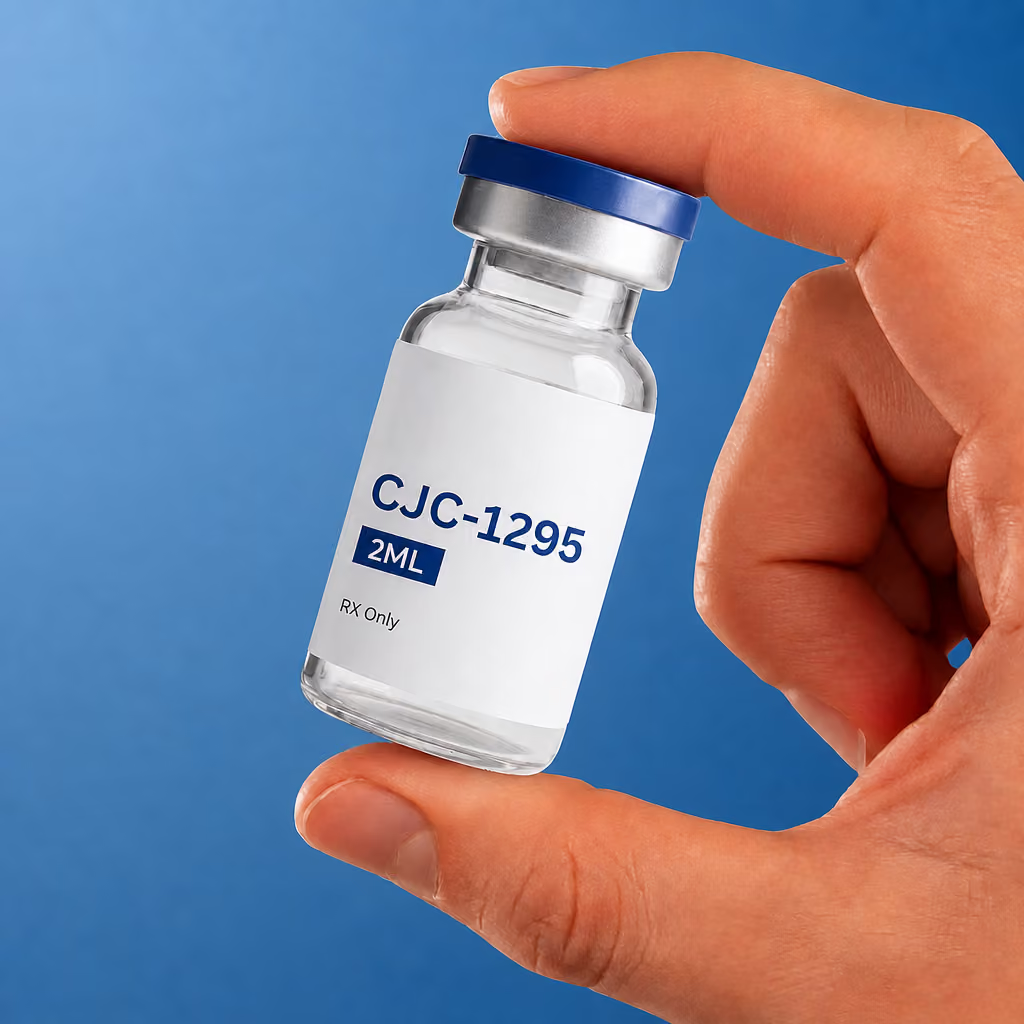
Who Should Not Use CJC-1295
A clear guide to who should not use CJC-1295, who needs extra caution and specialist review, and why each group is at greater risk.
- People with active cancer, and those who are pregnant or breastfeeding, should not use CJC-1295.
- A past history of cancer, uncontrolled diabetes, heart disease and pituitary disorders need careful specialist review.
- Competitive athletes should not use it: CJC-1295 is prohibited at all times under the WADA code.
- CJC-1295 is not FDA approved and long term safety data does not exist, so the threshold for caution is low.
- People under 18 should not use CJC-1295 outside a specialist setting.
- A full medical history, medication list and baseline labs are the only way to know whether it suits you.
In this article
CJC-1295 is not right for everyone. Because it raises your own growth hormone and IGF-1 for about a week after each injection, any condition that higher growth hormone could worsen is a reason for caution, and some are reasons not to use it at all. This guide sets out who should avoid CJC-1295, who needs extra care, and why. For the full list of reported side effects and risks, see our CJC-1295 side effects and safety guide.
CJC-1295 is not approved by the FDA for any use. It is prescribed at a licensed physician's discretion after a medical review. This article is educational and is not medical advice.
Why Caution Matters With CJC-1295
Two features of CJC-1295 shape how cautious prescribers need to be. The first is how long it lasts. In healthy adults, a single injection raised growth hormone for six days or more and IGF-1 for nine to eleven days, with a half life of roughly six to eight days. If a problem develops, the drug cannot simply be switched off; its effects fade over days.
The second is how little long term information exists. The human studies were small and lasted weeks. The FDA notes that available clinical data are limited and has cited serious adverse events including increased heart rate and systemic vasodilatory reaction. The only larger trial, in people with HIV associated abdominal fat, was halted in 2006 after a participant died. The trial physician attributed the death to undiagnosed heart disease, but the program ended and CJC-1295 was never approved. With so much unknown, the sensible approach is to keep people who are most likely to be harmed away from treatment.
People Who Should Not Use CJC-1295
Active cancer
Growth hormone and IGF-1 promote cell growth and division. Raising them during active cancer could, in theory, encourage a tumour to grow. For this reason CJC-1295 should not be used by anyone with an active cancer or who is currently being investigated for one.
Pregnancy and breastfeeding
There is no information on the safety of CJC-1295 in pregnancy or breastfeeding. Growth hormone and IGF-1 play important roles in development, so the risk to a baby cannot be judged. If you are pregnant, planning a pregnancy or breastfeeding, CJC-1295 is not an option.
Competitive athletes
Growth hormone releasing factors, including CJC-1295, are prohibited at all times, in and out of competition, under the World Anti-Doping Agency code. Anyone who competes in a tested sport risks a ban. This applies at every level, including amateur events that follow anti doping rules.
Known allergy
Anyone who has had an allergic reaction to CJC-1295 or to an ingredient in the preparation, such as bacteriostatic water containing benzyl alcohol, should not use it.
Children and teenagers
CJC-1295 has not been studied in people under 18. Growth in children and teenagers is managed by pediatric endocrinologists using approved treatments, and CJC-1295 has no place outside that specialist setting.
Frequently Asked Questions
Can I use CJC-1295 if I had cancer in the past?
Possibly not. A past history of cancer needs careful review with your oncologist, because growth hormone and IGF-1 promote cell growth. Many people with a cancer history will be advised not to use CJC-1295, and anyone with active cancer should not use it.
Is CJC-1295 safe during pregnancy or breastfeeding?
No. There is no safety information for pregnancy or breastfeeding, and growth hormone and IGF-1 are involved in development, so CJC-1295 should not be used.
Can athletes use CJC-1295?
Not if they compete in tested sport. CJC-1295 is prohibited at all times, in and out of competition, under the World Anti-Doping Agency code.
I have diabetes. Can I use CJC-1295?
Only after careful review. Growth hormone can raise blood sugar, so people with uncontrolled diabetes should not start it, and anyone with diabetes needs baseline testing, closer monitoring and coordination with the clinician who manages their diabetes.
Does heart disease rule out CJC-1295?
Heart disease needs a careful cardiac review. The FDA has cited increased heart rate and vasodilatory reactions with CJC-1295, and many people with heart conditions will be advised not to use it.
Is CJC-1295 legal to use without a prescription?
CJC-1295 is not FDA approved. It should only be used under the care of a licensed physician after a medical review. Avoid any seller that offers it without a prescription.
What are the alternatives if CJC-1295 is not suitable?
Options include lifestyle changes that support natural growth hormone release, shorter acting options such as sermorelin, and, for diagnosed growth hormone deficiency, approved treatments managed by an endocrinologist.
People Who Need Careful Specialist Review
Some conditions do not automatically rule out CJC-1295 but make it riskier. In these situations, a prescriber should only consider treatment after a thorough review, often with input from the specialist who manages the condition.
A past history of cancer
Someone who has completed cancer treatment and is in remission still has a higher risk of recurrence than the general population. Whether raising growth hormone and IGF-1 is reasonable depends on the type of cancer, how long ago it was treated and the advice of the oncologist. For many people the answer will be no.
Diabetes and prediabetes
Growth hormone reduces the body's sensitivity to insulin, which can push blood sugar up. People with uncontrolled diabetes should not start CJC-1295 until their glucose is stable, and anyone with diabetes or prediabetes needs baseline testing and closer monitoring. Our guide to CJC-1295 drug interactions and contraindications explains how diabetes medicines are affected.
Heart disease
Given the FDA's report of increased heart rate and vasodilatory reactions, and the fact that the halted trial involved a death attributed to heart disease, anyone with coronary artery disease, heart failure, a heart rhythm disorder or poorly controlled blood pressure needs a careful cardiac review. Many will be advised not to use CJC-1295.
Pituitary and other hormone disorders
CJC-1295 acts on the pituitary gland. People with a pituitary tumour, a history of pituitary surgery or radiation, or other hormone conditions need assessment by an endocrinologist. Untreated thyroid or adrenal problems should be addressed before any growth hormone related treatment is considered.
Other conditions
- Severe kidney or liver disease: these can change how the body handles hormones and peptides.
- Untreated sleep apnea: raised growth hormone can be associated with fluid retention, and sleep apnea itself needs treatment first.
- Diabetic eye disease: growth hormone may worsen retinopathy, so recent eye checks matter.
- Carpal tunnel syndrome or significant joint problems: these can be aggravated by raised growth hormone.
Older adults
The human studies of CJC-1295 enrolled healthy adults aged 21 to 61, so there is no direct information on people older than that. Older adults are generally more prone to fluid retention, joint pain and blood sugar changes when growth hormone rises, and are more likely to have heart disease, diabetes or a history of cancer. Age alone does not rule CJC-1295 out, but it raises the bar for a careful assessment and closer monitoring.
Recent surgery, serious illness or active infection
Growth hormone related treatments are generally avoided during an acute serious illness, after major surgery or trauma, and during an active infection. If you are recovering from any of these, wait until you have fully recovered and discuss timing with your prescriber.
People already using other growth hormone products
Anyone already taking prescribed growth hormone, another secretagogue, or products bought online that claim to raise growth hormone should not add CJC-1295 without a full review. Combining them makes the effect on IGF-1 harder to predict and increases the chance of side effects.
Questions to Ask Yourself Before a Consultation
Before booking an assessment, it can help to run through a few honest questions. A yes to any of them does not automatically rule you out, but it is something your prescriber must know:
- Have I ever been diagnosed with or treated for cancer, or is a test currently pending?
- Am I pregnant, trying to conceive or breastfeeding?
- Do I compete in any sport that follows anti doping rules?
- Do I have diabetes, prediabetes, heart disease, high blood pressure or a heart rhythm problem?
- Have I ever had a pituitary, thyroid or adrenal condition?
- Am I taking any other hormone, growth hormone or peptide product?
What Physicians Check Before Prescribing
A responsible prescriber will not issue CJC-1295 without a proper assessment. Expect questions about your medical history, current medicines and supplements, family history of cancer, heart health and sport. Baseline labs commonly include IGF-1, fasting glucose or HbA1c and other tests based on your history. Our article on how physicians evaluate CJC-1295 therapy describes this process step by step. Be wary of any service that skips these checks or sells CJC-1295 without a prescription.
Alternatives If CJC-1295 Is Not Right for You
If CJC-1295 is ruled out, there are still options to discuss. Lifestyle changes in sleep, strength training and nutrition support the body's natural growth hormone release and carry no drug risk; see our comparison of peptide therapy and lifestyle changes. Shorter acting options such as sermorelin wear off within hours rather than days, which some prescribers prefer in certain situations; our CJC-1295 vs sermorelin comparison explains the differences. People with diagnosed growth hormone deficiency should be assessed by an endocrinologist for approved treatments.
It is also worth asking what you hope treatment will achieve. If the goal is better sleep, more energy or easier recovery, there may be simpler causes to look at first, such as sleep apnea, low iron, thyroid problems, low vitamin D or the side effects of other medicines. A good prescriber will check for these before considering any growth hormone related treatment, and treating them can make a bigger difference than a peptide would.
Conclusion
CJC-1295 should not be used by people with active cancer, by anyone who is pregnant or breastfeeding, by competitive athletes, by people with a known allergy, or by anyone under 18. A past history of cancer, diabetes, heart disease, pituitary disorders and several other conditions need careful specialist review, and many people in these groups will be advised against it. Because CJC-1295 lasts for days, is not FDA approved and has no long term safety data, a thorough medical assessment before the first dose is essential. If you would like a physician to review whether it is suitable for you, you can start your online assessment.
In this article