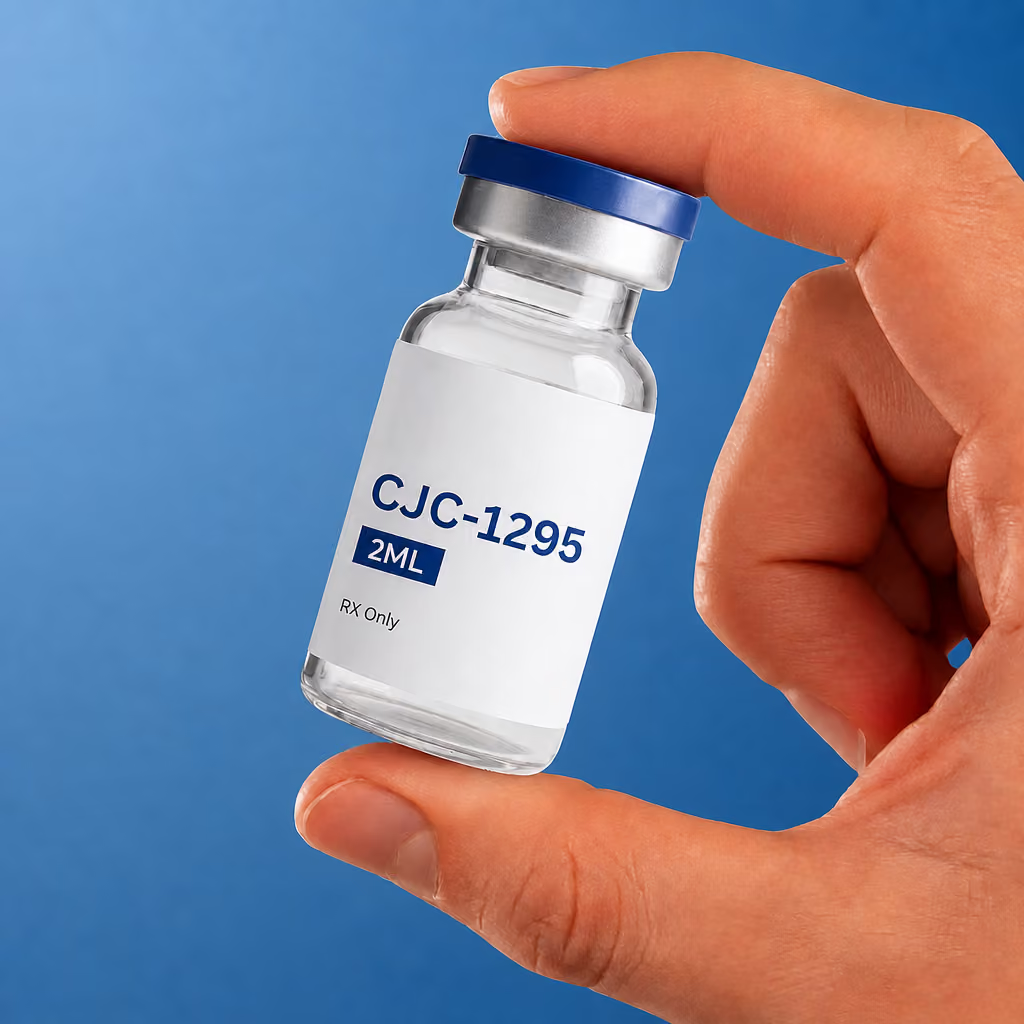
Starting CJC-1295 Therapy: What to Expect
A step by step guide to what happens when you start CJC-1295 therapy, from the first consultation and baseline labs to your first injections, the early weeks, follow up visits and setting realistic expectations.
- Treatment should start with a real medical assessment and baseline labs, not just a questionnaire.
- CJC-1295 is not FDA approved; your prescriber should explain what the evidence shows and what is unknown.
- Your first injections involve mixing, measuring and injecting at home, so training and a dose log matter.
- Measurable hormone changes come quickly; benefits such as sleep or energy have not been studied and vary.
- Report side effects early, especially flushing, a racing heartbeat, swelling or blood sugar changes.
- Follow up labs and reviews decide whether treatment is worth continuing.
In this article
Starting a new prescription treatment is easier when you know what to expect at each step. This guide walks through what typically happens when you begin CJC-1295 therapy, from the first consultation to your first injections and follow up visits, and how to set realistic expectations along the way. For background on what CJC-1295 is and how it works, see our guide to what CJC-1295 is.
CJC-1295 is not approved by the FDA for any use. It is prescribed at a licensed physician's discretion after a medical review. This article is educational and is not medical advice.
The Journey at a Glance
| Stage | What happens | What you can do |
|---|---|---|
| Before the consultation | Health questionnaire and medication list | Write down your goals, conditions, medicines and supplements |
| Consultation | Review of history, goals and evidence with a licensed clinician | Ask what the evidence shows and what is unknown |
| Baseline labs | IGF-1, glucose or HbA1c and other tests | Book promptly and keep copies of results |
| Decision and prescription | Clinician recommends treatment or alternatives | Make sure you understand why |
| Delivery | Pharmacy ships medication and instructions | Check the package, label and temperature |
| First injections | Mixing, measuring and injecting at home | Follow the training, start a dose log |
| Early weeks | Watching for side effects | Report anything unexpected |
| First follow up | Repeat labs and review | Bring your log and questions |
| Ongoing | Regular reviews of benefit and safety | Decide together whether to continue |
Before Your Consultation
Preparation makes your consultation more useful. Write down what you hope treatment will help with, and be specific: sleep, energy, recovery, body composition or something else. List every medicine, supplement and hormone treatment you take, with doses, and any past reactions to injections. Note your medical history, especially cancer, heart conditions, diabetes, thyroid or pituitary problems, and family history of cancer or heart disease. If you have recent blood test results, have them ready.
The Consultation
A good consultation, whether in person or by video, covers your goals, your history and the evidence. Your prescriber should explain that CJC-1295 is not FDA approved and that the human research is small. In healthy adults, a single injection raised growth hormone for six days or more and IGF-1 for nine to eleven days, but studies did not measure sleep, energy or body composition. They should also explain the safety picture: the FDA has cited serious adverse events including increased heart rate and systemic vasodilatory reaction, and CJC-1295's only larger trial was halted in 2006 after a participant died.
Expect your prescriber to check whether simpler causes, such as sleep apnea, thyroid problems or low iron, might explain your symptoms, and to discuss alternatives such as sermorelin or lifestyle changes. Our article on how physicians evaluate CJC-1295 therapy describes this process in detail.
Baseline Lab Tests
Before prescribing, your prescriber should order baseline blood tests. These commonly include IGF-1, fasting glucose or HbA1c, and other tests based on your history. These numbers are the reference point for everything that follows: they show whether CJC-1295 is safe to start and allow your response to be measured later. Book the tests promptly and keep a copy of the results.
Who Will Not Be Prescribed CJC-1295
Some people will be advised not to start: those with active cancer, anyone who is pregnant or breastfeeding, people under 18, anyone with a known allergy, and competitive athletes, because CJC-1295 is prohibited at all times under the World Anti-Doping Agency code. People with heart disease, uncontrolled diabetes or pituitary conditions need careful review. Our guide on who should not use CJC-1295 explains why.
Frequently Asked Questions
What happens at a CJC-1295 consultation?
A licensed clinician reviews your goals, medical history and medicines, explains what the evidence shows and what is unknown, checks for simpler causes of your symptoms, discusses alternatives and orders baseline labs.
Which tests do I need before starting?
Baseline tests commonly include IGF-1 and fasting glucose or HbA1c, with others based on your history.
How soon will I notice results?
Growth hormone and IGF-1 rise within days, but benefits such as sleep, energy or body composition have not been studied for CJC-1295 and vary from person to person. Track a baseline and trends to judge your own response.
What side effects should I watch for at the start?
Injection site reactions, flushing or lightheadedness, headaches, swelling in the hands or feet, joint aches and blood sugar changes. Seek emergency care for chest pain, fainting or a racing heartbeat that does not settle.
What if I miss a dose?
Contact your prescriber for advice. Because CJC-1295 lasts days, a missed dose is rarely urgent, but do not take two doses close together.
When should I stop CJC-1295?
If side effects are troublesome, labs move outside the safe range, a new health issue appears, or there is no meaningful benefit after a reasonable trial. Decide together with your prescriber.
Is CJC-1295 FDA approved?
No. It is prescribed at a licensed physician's discretion after a medical review, and the human evidence comes from small studies.
The Prescription and Delivery
If CJC-1295 is right for you, your prescriber sends the prescription to a licensed pharmacy. You should receive written instructions covering which form you have been prescribed, with or without DAC, how to mix it, your dose, your schedule, storage, and what to do if a problem occurs. When the package arrives, check that it is cold, the vial is sealed, and the label matches your prescription. Refrigerate it straight away unless the label says otherwise. Our guide to how to store and handle CJC-1295 covers the details.
Your First Injections
Most people find the first injection the hardest part, and it gets easier quickly. The basic steps are: wash your hands, mix the vial if needed, calculate and draw up your dose, clean the injection site, inject into a pinched fold of skin, and drop the syringe straight into a sharps container. Our dosage calculator and mixing chart explains the arithmetic, and our subcutaneous injection guide covers technique. If you are unsure about anything, ask your prescriber or pharmacist before injecting rather than guessing.
Start a dose log from the first injection: date, time, dose, site and any reaction. It takes seconds and makes every later conversation with your prescriber more useful.
The Early Weeks
The early weeks are mainly about safety and routine. Watch for injection site reactions, flushing or lightheadedness after a dose, headaches, swelling in the hands or feet, joint aches and changes in blood sugar if you monitor at home. Most local reactions are mild and settle on their own. Report anything unexpected to your prescriber, and seek emergency care for chest pain, fainting or a racing heartbeat that does not settle. Our guide to managing common CJC-1295 side effects explains what to watch for.
Because CJC-1295 with DAC lasts days, get into the habit of a fixed injection day with a reminder. Never double a dose to catch up after a missed one; contact your prescriber instead.
What You Might Notice, and When
The measurable changes are hormonal and appear quickly, as growth hormone and IGF-1 rise within days. Whether you notice changes in sleep, energy, recovery or body composition is individual and uncertain, because no published CJC-1295 study measured those outcomes. Some people report differences; others notice little. The best way to judge is to track a baseline before you start and compare trends over weeks, rather than expecting a set timeline. Our guide to tracking CJC-1295 progress shows how.
Your First Follow Up
After several weeks, your prescriber will usually repeat IGF-1 and glucose and review your log. The aim is to confirm that IGF-1 is in a safe range for your age and sex, that blood sugar is stable, and that any side effects are manageable. Your dose or schedule may be adjusted based on the results. Bring your questions, your log and any home readings, and mention anything that has changed in your health or medicines since you started.
Ongoing Treatment
After the first review, follow up continues at regular intervals. Each review should weigh three things: whether your labs are in range, whether side effects are acceptable, and whether you are getting meaningful benefit for your goals. If the answer to the last question is no after a reasonable trial, stopping is a sensible option, not a failure. Treatment may also be paused for illness, surgery or travel, always with your prescriber's advice.
Living With Treatment Day to Day
Once the routine is established, most people find CJC-1295 fits easily into daily life. A few habits help. Keep all your supplies in one clean place, with the sharps container next to them. Set a recurring reminder for your injection day and check the vial before every dose. Plan ahead for travel, keeping the medication cold and packing a travel sharps container. Tell any other doctor who treats you that you are taking CJC-1295, especially before surgery or if you start a new medicine. And keep your dose log going, even when everything is going smoothly, because it is the record your prescriber relies on at each review.
Costs to Plan For
Plan for the full cost, not just the medication: consultations, lab tests, medication, syringes, swabs, a sharps container and shipping. Ask for an itemised estimate over several months before you start, so there are no surprises. Check what happens if you need an extra consultation or repeat lab test, and how cancellation works if you decide to stop.
Questions to Ask at the Start
- What does the evidence show for my goal, and what is unknown?
- Which form of CJC-1295 am I being prescribed, and why?
- Which labs will you order now, and when will they be repeated?
- What side effects should make me call you, and what needs emergency care?
- How will we decide whether treatment is working, and when to stop?
Conclusion
Starting CJC-1295 therapy should follow a clear path: a genuine consultation that explains the evidence and risks, baseline labs, a prescription filled by a licensed pharmacy, training for your first injections, close attention to side effects in the early weeks, and follow up reviews that decide whether treatment is worth continuing. Hormone changes appear quickly, but benefits such as sleep or energy have not been studied and vary from person to person. Going in prepared, with realistic expectations and a simple log, makes the whole process safer and more useful. If you are ready to begin with a physician led assessment, you can start your online assessment.
In this article