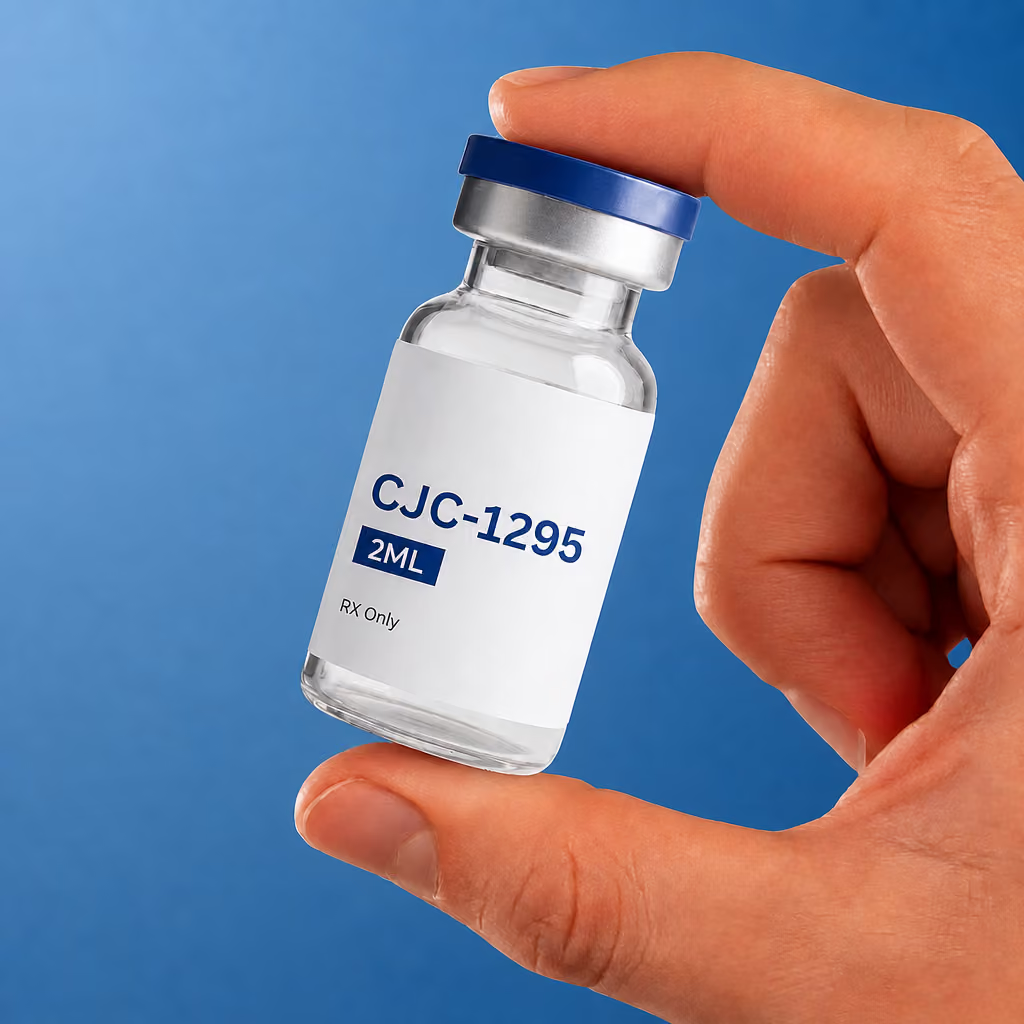
How CJC-1295 Affects GH and IGF-1 Levels
An explainer on how CJC-1295 raises growth hormone and IGF-1, what the research measured over the days after an injection, why individual responses differ, and how lab tests are used instead of calculators.
- CJC-1295 signals the pituitary to release more of your own growth hormone, which raises IGF-1.
- In healthy adults, a single dose raised growth hormone for six days or more and IGF-1 for nine to eleven days.
- Natural growth hormone pulses were preserved, with higher levels between pulses.
- Responses differ with age, body composition, sleep, medicines and health conditions.
- No calculator can predict your personal response; IGF-1 blood tests are how it is measured.
- Higher IGF-1 is not automatically better, so prescribers aim for a safe range.
In this article
Many people want to know how much CJC-1295 will raise their growth hormone and what that means for them. This page explains what is actually known: how CJC-1295 works on the growth hormone system, what the research measured in the days after an injection, why responses vary from person to person, and why a lab test, not a calculator, is the way to know your own response. An earlier version of this page offered an estimated response calculator. We have removed it, because no tool can reliably predict an individual result from a few inputs. For an introduction to the treatment, see our guide to what CJC-1295 is.
CJC-1295 is not approved by the FDA for any use. It is prescribed at a licensed physician's discretion after a medical review. This article is educational and is not medical advice.
Growth Hormone and IGF-1 in Brief
Growth hormone, often shortened to GH, is made by the pituitary gland at the base of the brain. Its release is controlled by two signals from the brain: growth hormone releasing hormone (GHRH), which switches release on, and somatostatin, which switches it off. GH is released in pulses, with the biggest pulse usually in the first hours of deep sleep, so a single GH blood test can be misleading.
Much of what GH does in the body is carried out through IGF-1, short for insulin-like growth factor 1, which is made mainly by the liver in response to GH. IGF-1 levels are far more stable through the day than GH, which is why doctors measure IGF-1 to judge how active the growth hormone system is.
How CJC-1295 Fits In
CJC-1295 is a modified version of the active part of GHRH. It binds the same receptor on the pituitary and prompts it to release more of your own growth hormone. What makes it different from natural GHRH is how long it lasts. A chemical attachment called a drug affinity complex lets it bind albumin in the blood, so in early animal work it was still present in plasma beyond 72 hours, compared with minutes for natural GHRH.
What the Research Measured
Two placebo controlled trials in healthy adults aged 21 to 61 tracked hormone levels after CJC-1295. After a single injection, growth hormone rose two to tenfold for six days or more and IGF-1 rose one and a half to threefold for nine to eleven days, with larger increases at higher doses. The estimated half life was 5.8 to 8.1 days, and with repeated doses IGF-1 stayed above baseline for up to 28 days.
A second study looked at the pattern of GH release by sampling blood every 20 minutes overnight before and one week after a dose. CJC-1295 increased trough and mean GH secretion and IGF-1 production while the natural pulse pattern was preserved. In other words, it lifted the baseline between pulses rather than replacing the body's rhythm with a flat, continuous level.
Frequently Asked Questions
How much does CJC-1295 raise growth hormone?
In healthy adults, a single injection raised growth hormone two to tenfold for six days or more, with larger increases at higher doses. Individual responses vary widely.
How long does CJC-1295 raise IGF-1?
In the same studies, IGF-1 rose one and a half to threefold for nine to eleven days after a single dose, and stayed above baseline for up to 28 days with repeated doses.
Can a calculator predict my response to CJC-1295?
No. Responses depend on age, body fat, sleep, medicines, health conditions and the product itself, and the research data are far too limited to predict an individual result. IGF-1 blood tests are the reliable measure.
Does CJC-1295 disrupt natural growth hormone pulses?
Research in healthy men found that natural pulses were preserved, with higher growth hormone levels between pulses.
Is a higher IGF-1 level better?
No. Persistently high IGF-1 is linked to fluid retention, joint pain, raised blood sugar and long term concerns about cancer risk. Prescribers aim for a safe range for your age and sex.
When should I have my IGF-1 tested?
Before treatment, after several weeks, and at regular intervals. Your prescriber may ask you to test on a specific day of your dosing cycle, because CJC-1295 lasts about a week.
With DAC and Without DAC
You may see two versions of CJC-1295 described online. The version with DAC is the one tested in the human studies described above. The DAC attachment binds albumin in the blood and is what extends its activity to days. The version without DAC, often called modified GRF 1-29, has the same four amino acid changes that protect it from rapid breakdown but lacks the albumin attachment. Without it, the peptide is cleared much faster and its effect on growth hormone is brief, more like a single pulse than a week long rise.
This matters for how results are interpreted. The figures for GH and IGF-1 above, including the six to eight day half life, apply to CJC-1295 with DAC. They should not be applied to the version without DAC, for which there is no comparable published human research. Some people use the names interchangeably, so always check exactly which version your prescription contains.
What Happens Over the Week After an Injection
Putting those findings together gives a general picture of the days after a single dose of CJC-1295 with DAC:
- Hours to the first day: growth hormone begins to rise as the peptide reaches the pituitary.
- The first several days: growth hormone stays raised, while IGF-1 climbs more gradually.
- Around one week: growth hormone drifts back toward baseline, while IGF-1 remains higher for longer.
- With repeated doses: IGF-1 can stay above baseline across the dosing interval.
This is a description of average trends in small groups of healthy volunteers, not a prediction for any one person. The exact size and timing of the rise varied with the dose used in the studies.
Why Responses Vary From Person to Person
Even at the same dose, people respond differently. Factors known to influence the growth hormone system include:
- Age: natural GH output and the pituitary's responsiveness tend to fall with age.
- Body fat: higher body fat is associated with lower GH release.
- Sleep: poor or short sleep reduces natural GH pulses.
- Sex hormones: oral estrogen lowers the liver's IGF-1 response to GH.
- Medicines: glucocorticoids and some other drugs blunt GH effects.
- Health conditions: liver disease, poorly controlled diabetes, thyroid problems and poor nutrition all affect IGF-1.
- The product: differences in preparation, storage and handling can change how much active peptide you actually receive.
Why a Calculator Cannot Predict Your Result
Online calculators that promise to estimate your GH or IGF-1 response from your age, weight and dose cannot account for most of these factors. The research behind CJC-1295 involved a few dozen healthy volunteers, which is far too little data to build a reliable individual prediction. Calculators that also list expected outcomes, such as better sleep or fat loss at a given dose, go further still, because those outcomes have never been measured in CJC-1295 studies. Our review of CJC-1295 clinical studies sets out exactly what was and was not measured.
How Your Response Is Actually Measured
The reliable way to know how you respond is a blood test. A careful prescriber measures IGF-1 before treatment, then again after several weeks, and at regular intervals afterwards. Because CJC-1295 lasts about a week, the timing of the blood draw relative to your last injection can affect the result, so your prescriber may ask you to test on a particular day of your dosing cycle. Fasting glucose or HbA1c is usually checked at the same time, because growth hormone can raise blood sugar. Our guide to tracking CJC-1295 progress explains how to keep these results alongside your symptoms.
Why Higher Is Not Better
It is tempting to think that the higher IGF-1 goes, the better. That is not the case. Persistently high IGF-1 is associated with fluid retention, joint pain, carpal tunnel symptoms and raised blood sugar, and long term exposure to high IGF-1 is a concern in relation to cancer risk. The FDA has also cited serious adverse events including increased heart rate and systemic vasodilatory reaction with CJC-1295. Prescribers therefore aim to keep IGF-1 within a range appropriate for your age and sex, and will lower the dose or stop treatment if it climbs too high. Our guide to managing common CJC-1295 side effects covers the symptoms to report.
Questions to Ask Your Prescriber
- What is my baseline IGF-1, and what range are you aiming for?
- When should I have my blood drawn relative to my injection day?
- How often will you repeat IGF-1 and glucose?
- What result would make you change my dose or stop treatment?
- Which of my medicines or health conditions could affect my IGF-1 result?
Conclusion
CJC-1295 prompts the pituitary to release more of your own growth hormone, and in healthy adults a single dose raised GH for six days or more and IGF-1 for nine to eleven days while keeping the natural pulse pattern. Responses vary widely with age, body fat, sleep, medicines and health, so no calculator can predict your personal result, and none of the studies measured health outcomes such as sleep or fat loss. The right way to know your response is regular IGF-1 and glucose testing with a prescriber who aims for a safe range rather than the highest number. If you would like a physician to assess whether CJC-1295 suits you, you can start your online assessment.
In this article