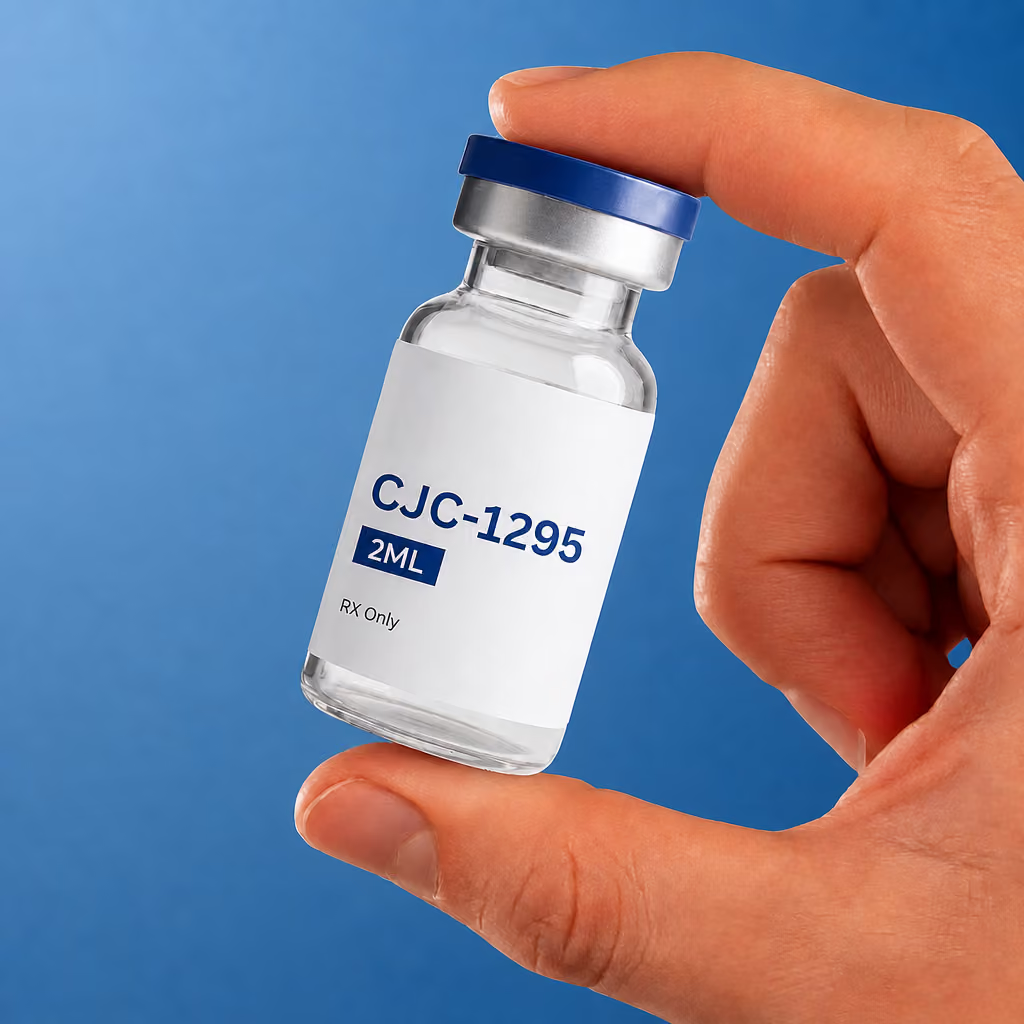
In Clinic vs Telehealth Peptide Therapy
A practical comparison of in clinic and telehealth peptide therapy, covering how consultations, lab tests, prescriptions, injection training and follow up work in each model, the safety standards to expect, and the red flags to avoid.
- Both models can be safe if they include a real medical assessment, baseline labs, a licensed pharmacy and follow up.
- Telehealth trades a physical exam for convenience; in clinic care offers hands on assessment and training.
- The prescriber should be licensed in the state where you are located at the time of the consultation.
- Lab tests before and during treatment are essential in either model.
- Clear routes for reporting side effects and getting urgent help matter more than the format.
- Avoid any service that skips assessment, promises results or sells peptides without a prescription.
In this article
Peptide therapies such as CJC-1295 can be prescribed through a traditional clinic or through a telehealth service. Each model has real advantages, and each can be done well or badly. The format matters much less than whether the service includes the safety steps that a prescription treatment with limited evidence needs. This guide compares the two models step by step and sets out what to expect from either. For the clinical process itself, see our article on how physicians evaluate CJC-1295 therapy.
CJC-1295 is not approved by the FDA for any use. It is prescribed at a licensed physician's discretion after a medical review. This article is educational and is not medical advice.
Why the Safety Steps Matter More Than the Format
CJC-1295 is long acting: a single injection raised growth hormone for six days or more and IGF-1 for nine to eleven days in healthy adults. It is not FDA approved, the FDA states that available clinical data are limited, and it has cited serious adverse events including increased heart rate and systemic vasodilatory reaction. Its only larger trial was halted in 2006 after a participant died. With that background, the most important question is not whether you see a doctor in person or online, but whether the service screens you properly, tests your labs, uses a licensed pharmacy and follows you up.
How Each Model Works
| Step | In clinic | Telehealth |
|---|---|---|
| Consultation | Face to face, with a physical examination | Video, phone or secure questionnaire with a licensed clinician |
| Baseline labs | Often drawn on site | Ordered to a local lab or a home collection kit |
| Prescription | Sent to a pharmacy or dispensed through the clinic | Sent to a licensed pharmacy that ships to you |
| Injection training | Shown in person, sometimes with the first dose in clinic | Written guides, videos or a live video session |
| Follow up | Clinic visits | Video visits and secure messaging |
| Urgent problems | Clinic or emergency services | Secure messaging, phone line or emergency services |
The In Clinic Model
In a traditional clinic, you meet a physician or other licensed clinician in person. They take a history, examine you, and often draw baseline blood tests on the same visit. Many clinics show you how to inject in person, and some give the first dose in the clinic so they can watch for any reaction. Follow up happens at scheduled visits.
Advantages: a physical examination, including blood pressure and heart rate; hands on injection training; easier assessment of a skin reaction or other physical sign; and a familiar setting for people who prefer face to face care.
Drawbacks: travel time and time off work, fewer appointment slots, and sometimes higher costs. Clinic based peptide services can also vary widely in quality; being in person does not guarantee thorough screening.
The Telehealth Model
In a telehealth model, you complete a medical questionnaire and consult a licensed clinician by video, phone or secure messaging. Labs are ordered to a local laboratory or sometimes a home collection kit. If the clinician prescribes, the prescription goes to a licensed pharmacy that ships the medication to you. Follow up happens through video visits and messaging.
Advantages: convenience, especially for people in rural areas or with busy schedules; easier access to follow up; and secure messaging for questions between visits.
Drawbacks: no physical examination, so some signs can be missed; injection training relies on guides and videos; and shipping adds a step where medication must be kept cold. The quality of telehealth services varies just as much as clinics.
Frequently Asked Questions
Is telehealth peptide therapy safe?
It can be, if it includes a genuine assessment by a licensed clinician, baseline and follow up labs, a licensed pharmacy, clear injection training and a reliable way to report side effects. The same standards apply to clinics.
Do I need a physical exam before starting CJC-1295?
Not always. Telehealth assessments rely on a detailed history and lab tests. If you have heart disease, high blood pressure or other conditions that benefit from examination, an in person assessment may be better.
Will I need blood tests with telehealth?
Yes. A responsible service orders baseline labs such as IGF-1 and fasting glucose or HbA1c, usually at a local laboratory, and repeats them during treatment.
How do I learn to inject through telehealth?
Through written guides, videos and ideally a live video session where you can ask questions. Ask to be shown how to mix, measure, inject and dispose of needles before your first dose.
Does the prescriber need to be licensed in my state?
In the United States, the prescribing clinician generally needs to be licensed in the state where you are located at the time of the consultation. A legitimate service will confirm this.
What are the red flags in a peptide service?
No medical history or labs, promises of specific results, dose packages chosen by goal, no named prescriber or licensed pharmacy, products labelled for research use, and no clear way to report side effects.
What a Good First Telehealth Visit Looks Like
A good first telehealth consultation should feel like a real medical appointment, not a sales call. Expect a detailed health questionnaire before the visit, a live conversation with a named, licensed clinician who has read it, and questions that go beyond your goals to your medical history, medicines, heart health and family history. The clinician should explain honestly what the evidence for CJC-1295 shows and does not show, order baseline labs before prescribing, and tell you what happens next. If the visit takes a few minutes and ends with a prescription and no lab order, that is a warning sign.
Licensing and Legitimacy
In the United States, a clinician who prescribes for you generally needs to be licensed in the state where you are physically located at the time of the consultation. A legitimate telehealth service will ask where you are, confirm you are in a state where it can practise, and identify the clinician who reviews your case. The pharmacy that fills your prescription should be licensed and should label the product with the medication name, strength, lot number and storage instructions.
Be cautious of any service that will not tell you who the prescribing clinician is, ships to you without a prescription, or labels products for research use only. Products sold that way have not been prepared under pharmacy standards. The FDA has noted that compounded drugs containing CJC-1295 may pose risks related to peptide impurities, which makes a properly licensed pharmacy especially important.
Screening: What Should Happen in Either Model
Whether in person or online, a responsible prescriber should ask about:
- Your goals and expectations, and whether simpler causes such as sleep apnea or thyroid problems might explain your symptoms.
- Any current or past cancer, and family history.
- Heart disease, rhythm problems, high blood pressure or fainting.
- Diabetes or prediabetes.
- Pituitary, thyroid or adrenal conditions.
- Pregnancy, plans to conceive or breastfeeding.
- Every medicine and supplement you take.
- Whether you compete in tested sport, where CJC-1295 is prohibited at all times under the World Anti-Doping Agency code.
Our guide on who should not use CJC-1295 explains why each of these matters.
Lab Testing
Baseline labs are essential in either model. At a minimum, expect IGF-1 and fasting glucose or HbA1c, with other tests based on your history. In clinic, these may be drawn on site; with telehealth, you usually visit a local lab. Labs should be repeated after several weeks of treatment and then at regular intervals. A service that prescribes without any baseline tests, or never reviews follow up results, is cutting a corner that matters. Our guide to tracking CJC-1295 progress explains what the results mean.
Injection Training
Learning to inject safely is easier in person, but it can be done well remotely with clear written instructions, a good video and the chance to ask questions over a live call. Whichever model you use, ask to be shown how to mix the vial if needed, how to calculate your dose, how to inject and how to dispose of needles. Our subcutaneous injection technique guide is a useful companion to either.
Follow Up and Getting Help
Good follow up is the same in both models: a scheduled review of symptoms and labs after several weeks, then regular check ins, and a clear decision about whether treatment is worthwhile. Just as important is knowing what to do between visits. Before you start, find out how to report a side effect, how quickly messages are answered, what to do out of hours, and when to go to emergency care. Chest pain, fainting or a racing heartbeat that does not settle always need emergency services, whichever model you use. Our guide on how to report peptide side effects covers the steps.
Prescriptions, Pharmacies and Delivery
With telehealth, your medication arrives by post or courier, which adds a step that does not exist when you collect it in person. Peptides need to stay cold, so a good pharmacy ships them in insulated packaging with cold packs and aims for short transit times. Check the package as soon as it arrives: the contents should be cool, the vial sealed and the label should match your prescription. If anything is wrong, contact the pharmacy before using it. Our guide to how to store and handle CJC-1295 explains what to look for.
Privacy and Your Health Records
Both clinics and telehealth services hold sensitive health information. Before signing up, check how the service stores your records, who can see them, whether video consultations are private and secure, and how to get a copy of your records. A legitimate healthcare provider will have a clear privacy policy and should handle your information in line with health privacy law.
Keeping Your Own Doctor Informed
Whether you use a clinic or telehealth, tell your regular doctor that you are taking CJC-1295. They may be treating other conditions, prescribing medicines that interact with it, or ordering tests that it could affect. Ask your peptide prescriber to share lab results and treatment details, or keep copies yourself to bring to appointments. Fragmented care is one of the main risks of specialised services, and simple communication avoids most of it.
Cost and Convenience
Telehealth is often cheaper in time and travel, and sometimes in consultation fees. In clinic care may cost more but bundles examination, labs and training in one place. In both, compare the total cost over several months, including consultations, labs, medication, supplies and shipping, and ask what is included before you commit. Be wary of very low introductory prices that rise sharply after the first month, and of subscriptions that are hard to cancel. A clear, itemised price list is a good sign in either model.
Which Model Might Suit You
- In clinic may suit you if: you have health conditions that benefit from examination, you are nervous about injecting, or you prefer face to face care.
- Telehealth may suit you if: you are comfortable with video consultations and self injection, you live far from a suitable clinic, or your schedule makes visits hard.
- A hybrid may suit you if: you want an in person assessment and training to start, with telehealth follow up afterwards.
Who Telehealth Serves Well
Telehealth has made specialist prescribing accessible to people who would otherwise struggle to reach it, including those in rural areas, people with mobility difficulties, carers and shift workers. For these groups, the convenience can be the difference between being properly monitored and not being monitored at all. The key is that convenience should never replace the safety steps described above.
Older Adults
The published CJC-1295 studies only enrolled adults up to the age of 61, and older adults are more likely to have heart disease, diabetes or a history of cancer. For older adults, an in person assessment with a blood pressure check and examination can add real value, even if follow up later moves online. Some older adults also find a face to face session the easiest way to learn injection technique with confidence.
Switching Between Models
You are not locked into one model. Some people start in a clinic for assessment and injection training, then move to telehealth for convenient follow up. Others start with telehealth and later prefer face to face care if a health issue develops. If you switch, make sure your new prescriber has your full history, recent labs, current dose and schedule, and any side effects you have had, so treatment continues safely without gaps or duplication.
Red Flags in Either Model
- No questions about cancer, heart health, pregnancy or sport.
- No baseline labs, or labs that are never reviewed.
- Promises of specific results such as fat loss, muscle gain or better sleep.
- Dose packages chosen by goal rather than by assessment.
- No named prescriber, no licensed pharmacy or no product label.
- No clear way to report side effects or get help.
Questions to Ask Before You Sign Up
- Who will review my case, and are they licensed in my state?
- Which labs will you order before and during treatment?
- Which pharmacy will fill my prescription, and how will it be shipped?
- How will I learn to inject, and who can I ask if I am unsure?
- How do I report side effects, and how quickly will someone respond?
- What is the full cost over three to six months?
Conclusion
In clinic and telehealth peptide therapy can both be safe and effective ways to access a prescription, and each has trade offs: in clinic care offers examination and hands on training, while telehealth offers convenience and easier follow up. What matters most is that the service includes a genuine medical assessment by a licensed clinician, baseline and follow up labs, a licensed pharmacy, clear injection training and a reliable way to get help. Whichever you choose, keep your own records and stay closely involved in every decision. If you would like to start with a telehealth service that includes those steps, you can start your online assessment.
In this article