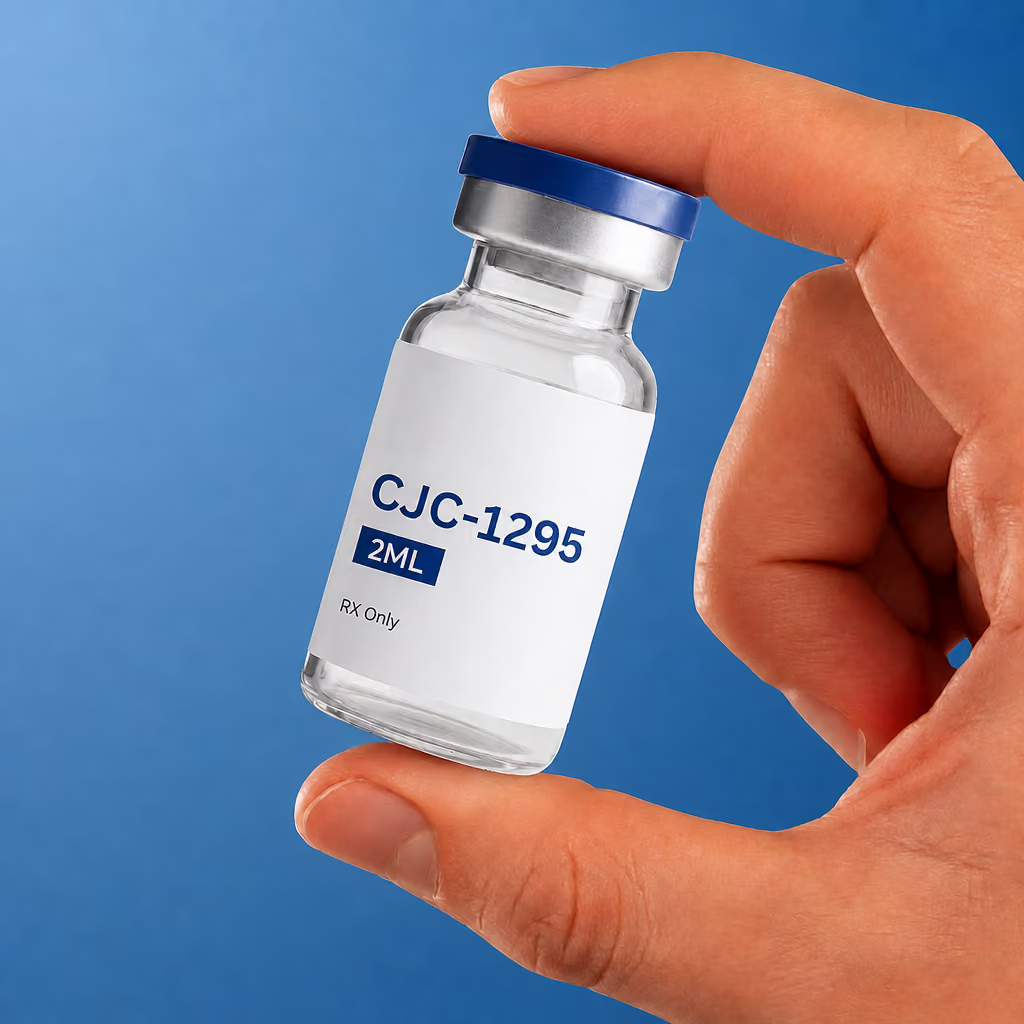
CJC-1295 and Ipamorelin: What They Are, How They Differ and What Studies Show
A complete guide to CJC-1295 and ipamorelin: what each peptide is, how they differ, what the research shows, dosing and timing questions, safety, and how to get a prescription.
- CJC-1295 and ipamorelin are two different peptides that raise the body's own growth hormone through two different receptors, which is why they are often prescribed together.
- CJC-1295 with DAC lasts about a week in the blood, while ipamorelin lasts about 2 hours, so they behave very differently once injected.
- Each peptide raised growth hormone in small human studies, but no published trial has tested the two together or measured muscle, fat loss, sleep or recovery.
- Neither is approved by the FDA, and the FDA has raised separate safety concerns about each one.
- Dosing, timing and stack protocols shared online do not come from clinical trials, so your prescriber sets the plan.
- Both are banned in sport at all times, and pills or sprays sold under these names have no human data behind them.
In this article
CJC-1295 and ipamorelin are two peptides that are often prescribed together to raise the body's own growth hormone. This guide explains what each one is, how they differ, what the research does and does not show, and what to know about dosing questions, safety and getting a prescription.
CJC-1295 and ipamorelin are not approved by the FDA for any use. They are prescribed at a licensed physician's discretion after an individual review. This article is educational and is not medical advice.
What Is CJC-1295 and Ipamorelin?
CJC-1295 is a synthetic version of growth hormone releasing hormone (GHRH), the signal the brain sends to tell the pituitary gland to release growth hormone. Ipamorelin is a separate peptide that copies a different signal, ghrelin, which also prompts growth hormone release. Neither one is growth hormone itself. Both work by asking the pituitary to release more of the growth hormone your body already makes.
When people search for "CJC-1295 ipamorelin", they usually mean the two peptides used together, either as two separate prescriptions or as one blended vial. A full explanation of what CJC-1295 is and how it works on its own covers the first half of the pair in more depth.
How CJC-1295 and Ipamorelin Work Together
The pituitary responds to two separate "release" signals. GHRH acts on one receptor, and ghrelin acts on another. A third signal, somatostatin, switches release off. Because CJC-1295 and ipamorelin act on different receptors, the idea behind pairing them is that stimulating both pathways at once produces a larger growth hormone pulse than either alone.
That idea is based on how the pituitary works, but it has not been tested with the two peptides together in a published trial. A bigger hormone pulse is also a lab measurement, not proof that people end up leaner, stronger or better rested.
CJC-1295 vs Ipamorelin: Key Differences
The two peptides differ most in how long they last. CJC-1295 with DAC binds to albumin in the blood, giving it a half life of 5.8 to 8.1 days in healthy adults, with growth hormone raised for 6 days or more after a single dose. Ipamorelin is cleared much faster. In a study of healthy men, it had a half life of about 2 hours and produced a single growth hormone peak about 40 minutes after dosing.
| Feature | CJC-1295 | Ipamorelin |
|---|---|---|
| Receptor it acts on | GHRH receptor | Ghrelin receptor |
| How long it lasts in the blood | Half life of 5.8 to 8.1 days (with DAC) | Half life of about 2 hours |
| Growth hormone pattern | Raised for 6 days or more, with natural pulses preserved | A single peak about 40 minutes after a dose |
| Main human research | Two small trials in healthy adults measuring hormone levels | Hormone studies in healthy men and a Phase 2 trial after bowel surgery |
| FDA status | Not approved; serious adverse events cited | Not approved; listed with safety concerns for compounding |
| Sport | Prohibited at all times by WADA | Prohibited at all times by WADA |
Early laboratory research described ipamorelin as the first selective growth hormone secretagogue, because in animal studies it released growth hormone without the large rises in cortisol seen with older peptides of its type. CJC-1295, for its part, was found to preserve natural growth hormone pulses in healthy men while raising the level between them.
Does CJC-1295 and Ipamorelin Work?
It depends what "work" means. Each peptide has been shown to raise growth hormone in people. That is a real, measured effect. What has not been shown is that the pair, or either peptide alone, improves body composition, sleep, recovery or how people feel.
The largest human trial of ipamorelin tested it in a different setting altogether. In a Phase 2 trial in 117 people after bowel surgery, intravenous ipamorelin twice daily was well tolerated but did not speed recovery of normal eating compared with placebo. No published trial has given CJC-1295 and ipamorelin together and measured health outcomes.
Frequently Asked Questions
Is CJC-1295 the same as ipamorelin?
No. CJC-1295 is a synthetic version of GHRH, while ipamorelin copies ghrelin and acts on a different receptor. Both prompt the pituitary to release growth hormone, which is why they are often prescribed together.
What is the difference between CJC-1295 and ipamorelin?
The biggest difference is duration. CJC-1295 with DAC has a half life of 5.8 to 8.1 days, while ipamorelin lasts about 2 hours and produces a single growth hormone peak. They also act on different receptors.
Does CJC-1295 and ipamorelin work?
Each peptide has been shown to raise growth hormone in people. No published trial has tested the two together or shown improvements in muscle, fat loss, sleep or recovery.
Does CJC-1295 and ipamorelin help with muscle growth and fat loss?
There is no published evidence that it does. Muscle and fat outcomes have not been measured in trials of either peptide or the combination, and training, protein intake and sleep remain the proven drivers.
What is the best time to take CJC-1295 and ipamorelin?
No study has compared morning and evening doses. Evening dosing is often suggested because growth hormone is released mainly during deep sleep, but your prescriber sets the timing for you.
Is CJC-1295 and ipamorelin FDA approved?
No. Neither peptide is approved by the FDA for any use, and the FDA has raised separate safety concerns about each one. They can only be prescribed at a licensed physician's discretion.
Does CJC-1295 and ipamorelin come as a pill?
The human research used injections. There is no published human data on CJC-1295 or ipamorelin as a pill, capsule or spray, and peptides are generally broken down in the digestive tract.
Benefits Claims: Muscle Growth, Fat Loss and Before and After Photos
Muscle growth, fat loss and visible changes in the face and body are the benefits most often linked to CJC-1295 and ipamorelin. None of them has been measured in a published trial of either peptide or the combination. The claims are reasoned from what growth hormone does in general, and the wider picture is set out in the evidence on CJC-1295 benefits.
Before and after photos, including those aimed at women, cannot separate the peptides from changes in training, diet, sleep, lighting or expectation. They are not evidence that the treatment caused the change. If you do start treatment, agree with your prescriber in advance what will be measured, such as IGF-1 levels and body measurements, so that any change can be judged against a real starting point.
CJC-1295 With DAC or Without DAC in the Combination
Products sold as "CJC-1295 ipamorelin" vary. Some use CJC-1295 with DAC, the long acting form studied in the published trials. Others use the version without DAC, often called modified GRF (1 to 29), which is cleared from the blood far faster and has no published human dosing data. Blends that combine both peptides in one vial, often labelled with two strengths such as 5 mg and 5 mg, fix the ratio between them.
These differences matter. The same label can describe very different products, and a blend means the two peptides cannot be adjusted separately. Ask your prescriber which form of CJC-1295 is being prescribed and whether the peptides come separately or blended.
Dosage, Timing and Reconstitution Questions
Many people search for a CJC-1295 ipamorelin dosage per week, a stack protocol or a blend dosage per day. There is no evidence based answer. The published CJC-1295 studies tested it alone with weight based doses, and the ipamorelin studies used intravenous infusions in hospital or research settings. The protocols shared on forums do not come from clinical trials, and the reasons doses vary so widely are explained in how CJC-1295 dosing is decided.
The best time to take CJC-1295 and ipamorelin is a similar case. Growth hormone is released mainly during deep sleep, which is why evening dosing is often suggested, but no study has compared morning and evening doses. Reconstitution, meaning mixing the powder with sterile water, should follow the instructions from the dispensing pharmacy exactly. Your prescriber sets the dose, timing and schedule, and you should not change them on your own.
Side Effects and Safety
Both peptides raise growth hormone, so both carry the risks that come with higher growth hormone and IGF-1, such as fluid retention, joint aches, tingling in the hands and changes in blood sugar. Injection site reactions, flushing and headache are also described. Combining two peptides makes it harder to tell which one is causing a side effect.
The FDA has raised concerns about each peptide separately. For CJC-1295, it identified serious adverse events including increased heart rate and a systemic vasodilatory reaction. For ipamorelin, its compounding safety review cited a published study reporting serious adverse events including death when ipamorelin was given intravenously, and noted that it lacks safety information for other injectable routes. The full picture of CJC-1295 side effects and safety is worth reading before starting.
How It Compares With Sermorelin, Tesamorelin and IGF-1 LR3
People often weigh CJC-1295 and ipamorelin against other growth hormone peptides. Sermorelin is an older and much shorter acting GHRH analog that was once FDA approved, and the comparison between CJC-1295 and sermorelin covers how the two differ. Tesamorelin is another GHRH analog, and in a trial of 412 people with HIV it reduced abdominal fat over 26 weeks. That result applies to tesamorelin, not to CJC-1295 or ipamorelin.
IGF-1 LR3 works differently. It is a modified form of IGF-1 itself rather than a signal to the pituitary, and we found no published human trials of it. Combining CJC-1295 and ipamorelin with tesamorelin, sermorelin or IGF-1 LR3 stacks more unknowns on top of each other, and the broader questions that raises are covered in combining CJC-1295 with other peptides.
Is CJC-1295 and Ipamorelin Legal, and Can You Get It Online?
CJC-1295 and ipamorelin are legally available in the United States only with a prescription from a licensed physician. Products listed online as "for sale" for research are not intended for people and are not made or checked to prescription standards. Pills, capsules and sprays sold under these names have no published human data, since the studies used injections and peptides are generally broken down in the digestive tract.
The World Anti Doping Agency prohibits both GHRH analogs and ghrelin mimetics such as ipamorelin at all times, so competitive athletes should not use either. With CJC-1295.com, a licensed physician reviews your health history online and decides whether CJC-1295 and ipamorelin are appropriate. Plans start at $157 a month and include the physician consultation and free shipping.
Reviews and Reddit Reports
Reviews and forum posts are useful for understanding what people expect, but they are not evidence. Reports are self selected, rarely include lab results, and often involve different products, doses and other treatments at the same time. Treat them as questions to bring to your prescriber rather than answers.
Who Should Not Use CJC-1295 and Ipamorelin
Anyone who should not use CJC-1295 on its own should not use it with ipamorelin. That includes people with active cancer or a history of cancer, because IGF-1 encourages cell growth, and people who are pregnant or breastfeeding, since no safety data exist. People with diabetes, heart disease or pituitary conditions need a physician who knows their history to weigh the risks first, and the main groups are set out in who should not use CJC-1295.
Questions to Ask Your Prescriber
Because there is no trial of the combination, the conversation with your prescriber matters more than any summary. Ask why two peptides are being suggested rather than one, and whether starting with a single peptide first would make your response easier to judge. Ask which form of CJC-1295 is included, with or without DAC, and whether the peptides are separate or blended.
It also helps to ask how often you will inject each one, which blood tests will be checked and when, and what result would lead to a change or a stop. Clear answers make it easier to tell whether the treatment is doing anything, and to stop if it is not.
Conclusion
CJC-1295 and ipamorelin are two peptides that raise the body's own growth hormone through two different receptors, one lasting about a week and the other about 2 hours. Each has been shown to raise growth hormone in people, but no published trial has tested them together or shown benefits for muscle, fat loss, sleep or recovery. Neither is FDA approved, the FDA has raised safety concerns about both, and the dosing protocols shared online are not evidence based.
If you want a licensed physician to review whether CJC-1295 and ipamorelin are right for you, start your intake.
In this article