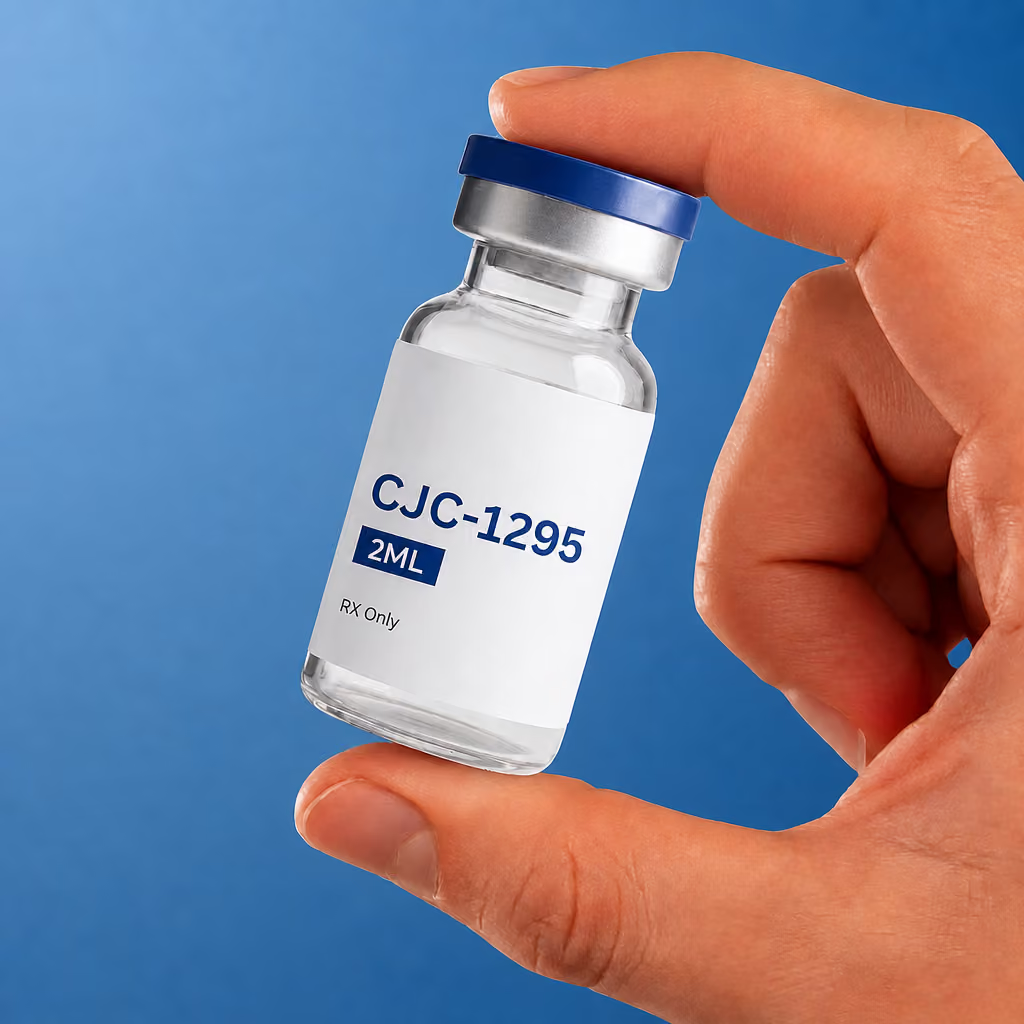
Combining CJC-1295 With Other Peptides
An evidence based look at combining CJC-1295 with other peptides, especially ipamorelin, covering the theory behind combinations, what published research actually shows, the added safety questions and how to make a decision with your prescriber.
- CJC-1295 acts on the GHRH receptor; ipamorelin acts on the ghrelin receptor, so the two are often marketed together.
- There are no published clinical trials showing the combination improves health outcomes.
- Neither CJC-1295 nor ipamorelin is FDA approved, and the FDA has raised safety concerns about both.
- Combining peptides makes IGF-1 harder to predict and side effects harder to attribute.
- Stack dosing and cycling protocols seen online do not come from clinical trials.
- Any combination should be a deliberate choice by your prescriber, with closer monitoring.
In this article
CJC-1295 is frequently sold or prescribed alongside other peptides, most often ipamorelin, on the idea that combining them produces a bigger or more natural growth hormone response. This article explains the reasoning behind combinations, what the published research does and does not show, and the safety questions they raise. It replaces an earlier version of this page that presented stacking doses and cycle lengths as standard practice, which they are not. For background on CJC-1295 on its own, see our guide to what CJC-1295 is.
CJC-1295 is not approved by the FDA for any use. It is prescribed at a licensed physician's discretion after a medical review. This article is educational and is not medical advice.
The Theory Behind Combining Peptides
Your pituitary gland releases growth hormone in response to two main stimulating signals. Growth hormone releasing hormone (GHRH) acts on one receptor, and ghrelin acts on another. Somatostatin, a third signal, switches release off. The theory behind combinations is that stimulating both the GHRH and ghrelin pathways at once produces a larger growth hormone pulse than either alone, because the two pathways work through different mechanisms inside the pituitary cells.
That idea has some basis in physiology. But a larger growth hormone pulse is a hormone measurement, not a health outcome. Whether a combination improves sleep, recovery, body composition or anything else people care about is a separate question, and it has not been answered by published trials.
CJC-1295 on Its Own
CJC-1295 with DAC is a long acting GHRH analog. In healthy adults, a single injection raised growth hormone two to tenfold for six days or more and IGF-1 one and a half to threefold for nine to eleven days, with an estimated half life of 5.8 to 8.1 days. A second study found that natural growth hormone pulses were preserved while trough and average levels rose. These are the only published human data on CJC-1295, and they measured hormone levels rather than health outcomes.
Ipamorelin
Ipamorelin acts on the ghrelin receptor. Early research described it as the first selective growth hormone secretagogue, because in animal studies it released growth hormone without large effects on certain other hormones that older secretagogues affected. It has not been approved by the FDA for any use. The FDA lists ipamorelin among substances that may present significant safety risks for some compounding, citing a published study in which serious adverse events including death were reported when ipamorelin was given intravenously for gastric motility, and noting that it lacks safety information for other injectable routes.
The two peptides differ sharply in how long they last and how much human research exists for each, and how CJC-1295 and ipamorelin compare is set out side by side in a dedicated article.
What the Research Shows About the Combination
There are no published clinical trials of CJC-1295 combined with ipamorelin that measure health outcomes such as body composition, sleep, recovery or quality of life. The combination's popularity comes from physiology, marketing and personal reports rather than controlled evidence. That does not prove it is ineffective or unsafe, but it means claims about synergy for specific benefits go beyond what has been tested.
Combination vs Single Peptide at a Glance
| Question | CJC-1295 alone | CJC-1295 plus ipamorelin |
|---|---|---|
| Pathways involved | GHRH receptor | GHRH receptor and ghrelin receptor |
| Published human data | Small pharmacology studies of hormone levels | No published clinical trials of the combination |
| FDA status | Not approved | Neither component approved |
| FDA safety notes | Increased heart rate and vasodilatory reactions cited | Adds ipamorelin, whose compounding category notes serious events with intravenous use |
| Predictability of IGF-1 | Measured in research | Less predictable; needs closer monitoring |
| Attributing side effects | One medicine to consider | Harder to tell which component is responsible |
Frequently Asked Questions
Why is CJC-1295 combined with ipamorelin?
CJC-1295 acts on the GHRH receptor and ipamorelin on the ghrelin receptor. The theory is that stimulating both pathways gives a larger growth hormone pulse than either alone.
Is there research on CJC-1295 and ipamorelin together?
There are no published clinical trials of the combination that measure health outcomes such as body composition, sleep or recovery. Claims of synergy for specific benefits go beyond what has been tested.
Is ipamorelin FDA approved?
No. The FDA lists ipamorelin among substances that may present significant safety risks for some compounding, citing serious adverse events including death when it was given intravenously in a study.
What dose should I use for a CJC-1295 stack?
There is no research based stack dose. Published CJC-1295 studies tested it alone with weight based doses. Any combination dose is a clinical judgement by your prescriber.
Is it safer to start with one peptide?
Many prescribers prefer to start with one, confirm the response and tolerance with labs, and only then consider adding another, because it makes benefits and side effects easier to interpret.
Can I combine CJC-1295 with sermorelin?
Both act on the same receptor, so combining them is hard to justify and makes IGF-1 harder to predict. Only do so if your prescriber has a specific reason and monitors you closely.
Why a Bigger Growth Hormone Pulse Is Not Automatically Better
Much of the marketing around combinations focuses on producing the largest possible growth hormone release. But more is not necessarily better. Growth hormone acts largely through IGF-1, and the goal in careful practice is to keep IGF-1 within a safe range for your age and sex rather than as high as possible. Persistently high levels can cause fluid retention, joint pain, tingling in the hands and raised blood sugar, and long term exposure is a concern in relation to cancer risk. A larger pulse also does not tell you anything about whether you will sleep better, recover faster or change your body composition, because those outcomes have not been measured for these peptides.
The Safety Questions Combinations Raise
Combining peptides adds uncertainty in several ways:
- Less predictable hormone levels: stimulating two pathways can raise growth hormone and IGF-1 more than intended. Persistently high IGF-1 is associated with fluid retention, joint pain, raised blood sugar and long term concerns about cancer risk.
- Harder to identify the cause of side effects: if you develop flushing, swelling or blood sugar changes, it is harder to know which peptide is responsible.
- Stacked safety signals: the FDA has cited increased heart rate and systemic vasodilatory reaction with CJC-1295, and has separate concerns about ipamorelin. Combining them combines the unknowns.
- Product quality: two compounded peptides means two products whose purity and strength matter.
CJC-1295's only larger clinical trial was also halted in 2006 after a participant died, a reminder that its long term safety has not been established on its own, let alone in combination.
About Stack Doses and Cycles
You will find many stacking protocols online, with fixed doses of each peptide, set times of day and cycles such as several weeks on followed by several weeks off. None of these come from clinical trials. The published CJC-1295 studies used weight based doses, mainly 30 or 60 mcg per kg, over a few weeks, and did not test combinations or cycling. If your prescriber uses a combination, the doses and schedule are a clinical judgement for you specifically, not a standard protocol. Our CJC-1295 dosage guide explains how dosing decisions are made.
Practical Issues With Combinations
Combinations also make treatment more complicated in everyday terms. Ipamorelin is short acting, so it is usually given more often than CJC-1295 with DAC, which means more injections, more supplies and more chances for missed or doubled doses. Each peptide may need different storage and mixing instructions, and two vials mean two sets of calculations. If you do use a combination, label each vial clearly with its name and concentration, keep a separate column for each in your dose log, and never mix two peptides in one syringe unless your pharmacist has specifically told you it is safe to do so.
Common Marketing Claims, Decoded
- Synergistic: usually means the two act on different pathways, not that a trial has shown better outcomes.
- Mimics natural release: refers to growth hormone patterns, not to proven health benefits.
- Clinically studied: often refers to studies of one peptide alone, or of different molecules such as tesamorelin.
- Optimal stack protocol: a dosing plan that has not been tested in published trials.
- No side effects: no peptide that changes hormone levels can promise this, and the FDA has cited serious adverse events with both.
Combining With Other Treatments
The same principles apply to combining CJC-1295 with sermorelin, tesamorelin, recombinant growth hormone or products marketed to raise growth hormone. Adding a second medicine that acts on the same axis makes IGF-1 harder to predict. Combining CJC-1295 with sermorelin, which acts on the same receptor, is particularly hard to justify. Tell your prescriber about every hormone, peptide and supplement you use; our guide to CJC-1295 drug interactions and contraindications covers the medicines that matter most.
If Your Prescriber Suggests a Combination
A combination can be a reasonable clinical choice in some situations, but it should be a deliberate decision rather than a default package. Useful questions to ask:
- Why do you think a combination is better for me than a single peptide?
- What does the evidence show for this combination, and what is unknown?
- How will you set the dose of each, and will we start with one before adding the other?
- Which labs will you check, and how often?
- If I get a side effect, how will we work out which peptide is responsible?
A cautious approach some prescribers use is to start with one peptide, confirm how you respond and tolerate it with labs, and only then consider adding a second. That makes it much easier to interpret both benefits and side effects, and it means you only add complexity if the first peptide alone has not met a reasonable goal.
Monitoring on a Combination
Monitoring should be at least as close as for a single peptide, and often closer. Expect IGF-1 and fasting glucose or HbA1c before starting and after several weeks, with regular checks afterwards. Keep a detailed log of doses for each peptide, symptoms and any home readings. Our guide to tracking CJC-1295 progress explains how.
Stopping a Combination
If you decide to stop, or your prescriber recommends stopping because of side effects or lab results, the two peptides will wear off at different rates. Short acting peptides fade within hours, while CJC-1295 with DAC fades over days. Ask your prescriber whether to stop both together or one at a time, and whether to repeat labs afterwards. Keep logging any symptoms until they settle, and tell your prescriber if anything new appears after stopping.
Who Should Not Use Combinations
Anyone who should not use CJC-1295 on its own should not use it in combination: people with active cancer, those who are pregnant or breastfeeding, and competitive athletes, since growth hormone releasing factors and secretagogues are prohibited at all times under the World Anti-Doping Agency code. People with heart disease, diabetes or pituitary conditions need particular caution. See our guide on who should not use CJC-1295.
Conclusion
CJC-1295 is often combined with ipamorelin on the theory that stimulating two growth hormone pathways gives a stronger response. There are no published clinical trials showing the combination improves health outcomes, neither peptide is FDA approved, and the FDA has raised safety concerns about both. Combinations make IGF-1 harder to predict and side effects harder to trace, and the stack doses and cycles seen online do not come from research. If a combination is considered, it should be a deliberate decision by your prescriber with closer monitoring. If you would like a physician to review your options, you can start your online assessment.
In this article