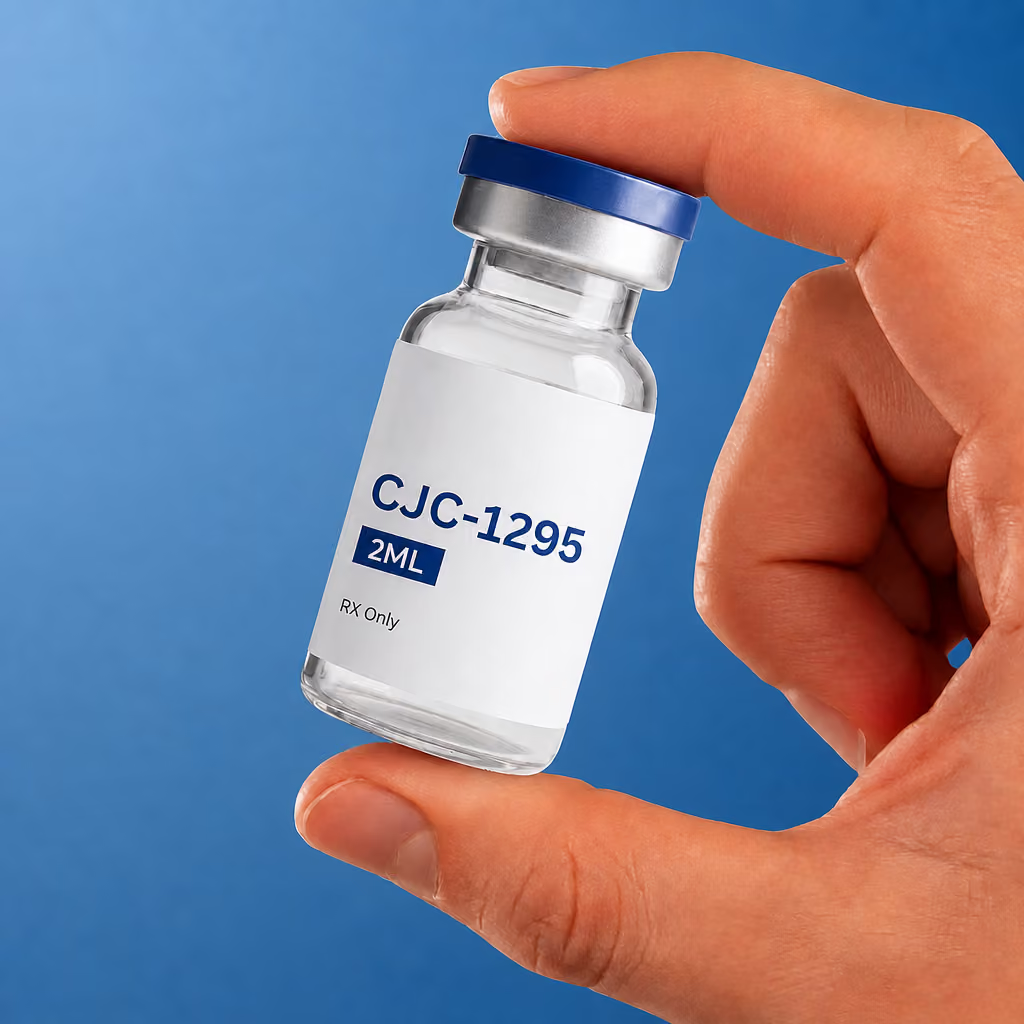
Traveling With Peptides: Storage and Dosing
A practical guide to traveling with CJC-1295 and other injectable peptides, covering packing, keeping vials cold, getting through airport security, adjusting for time zones, hotel storage and safe needle disposal on the road.
- Plan with your prescriber before you go, especially for long trips or big time zone changes.
- Carry vials in your hand luggage in a labelled box inside an insulated case with cold packs.
- In the United States, TSA allows medically necessary liquids and cooling packs once declared and screened.
- Never let vials freeze or overheat, and check hotel fridges with a thermometer.
- Because CJC-1295 lasts about a week, small timing shifts matter less than with daily medicines, but agree a plan in advance.
- Bring a travel sharps container and never leave used needles in hotel bins.
In this article
Holidays, work trips and family visits do not need to interrupt treatment, but traveling with an injectable peptide does take some planning. You need to keep the medication cold, get it through security, fit doses around time zones and dispose of needles safely away from home. This guide covers each step for CJC-1295 and similar peptides. It builds on our guide to how to store and handle CJC-1295, which explains the basics of keeping vials stable.
CJC-1295 is not approved by the FDA for any use. It is prescribed at a licensed physician's discretion after a medical review. This article is educational and is not medical advice.
Talk to Your Prescriber Before You Go
A few weeks before a trip, let your prescriber know where you are going and for how long. Useful things to agree on include:
- Whether to dose while away: for short trips it may be simpler to time your dose just before you leave.
- How to handle time zones: especially if you will cross several.
- Refill timing: so you leave with enough medication and supplies, plus a margin for delays.
- What to do if a vial is damaged or lost: and who to contact.
- Documentation: a copy of your prescription or a short letter describing your medication and supplies.
Because CJC-1295 with DAC has an estimated half life of 5.8 to 8.1 days, a dose taken a day earlier or later than usual has a smaller effect on your levels than it would with a short acting medicine. That gives some flexibility, but any change to your schedule should be agreed with your prescriber rather than improvised.
Packing List
| Item | Carry on or checked | Notes |
|---|---|---|
| CJC-1295 vials in labelled pharmacy box | Carry on | Keeps them out of extreme hold temperatures and with you if luggage is delayed |
| Insulated case with cold packs | Carry on | Declare at security; packs may be frozen, partly frozen or melted |
| Unused syringes and needles | Carry on | Keep with the medication they are used for |
| Alcohol swabs | Either | Pack spares |
| Travel sharps container | Carry on | Hard sided and closable for used needles |
| Copy of prescription or prescriber letter | Carry on | Useful at security, customs and if you need medical care abroad |
| Fridge thermometer | Either | Check hotel fridges on arrival |
| Dose log and time zone plan | Carry on | Agreed with your prescriber before you leave |
Pack enough syringes and swabs for every planned dose plus extras, in case of spills, damaged supplies or travel delays. Our CJC-1295 supplies checklist covers each item in more detail.
Keeping Vials Cold on the Way
Use an insulated medication case or small cooler bag with cold packs. A few practical points:
- Avoid direct contact with ice packs: wrap the vial box in a cloth so it does not freeze.
- Keep the case out of the sun: and never leave it in a parked car.
- Plan for the whole journey: from leaving home to reaching a fridge, with spare cold packs if the trip is long.
- Keep the original box and label: it identifies the medication and protects it from light.
Packing the Insulated Case
A well packed case keeps vials cold for longer. Freeze the cold packs fully the night before. Place a cloth or bubble wrap layer against the packs, then the vial box, then another layer, so the vials stay cold without touching anything frozen. Fill gaps with soft items so the box does not move around. Keep syringes and swabs in a separate pocket so you can reach them without opening the cold section. If the trip is long, pack a second set of cold packs and ask cafes or your accommodation to refreeze them along the way.
Getting Through Airport Security
In the United States, the Transportation Security Administration states that it allows larger amounts of medically necessary liquids, gels and aerosols in reasonable quantities for your flight, and that ice packs and freezer packs may be presented frozen, partially frozen or melted. Associated supplies such as syringes must also be screened before they are allowed through. In practice:
- Tell the officer at the start of screening that you are carrying medically necessary liquids and injection supplies.
- Place them in a separate bin from your other belongings, along with the cold packs.
- Expect additional screening: officers may inspect the items visually or test them.
- Ask for alternatives if you do not want the vial X rayed or opened; TSA allows you to request this.
- Keep used needles in a hard sided sharps container.
Rules differ in other countries and can change, so check the rules for each airport and airline on your itinerary before you travel.
Frequently Asked Questions
Can I take CJC-1295 on a plane?
In the United States, TSA allows medically necessary liquids, cooling packs and injection supplies through security once they are declared and screened. Carry them in your hand luggage and check the rules for other countries and airlines.
How do I keep CJC-1295 cold while traveling?
Use an insulated case with cold packs, wrap the vial box so it does not touch the packs directly, keep it out of the sun and never leave it in a car. Check your destination fridge with a thermometer.
Should I pack CJC-1295 in checked luggage?
Keep it in your hand luggage. The hold can get very cold or warm, and checked bags can be delayed or lost.
How do I handle time zones with CJC-1295?
Agree a plan with your prescriber before you leave. Because CJC-1295 lasts about a week, the aim is usually to keep a similar interval between injections, adjusting the day gradually for large time shifts.
Can I travel internationally with CJC-1295?
Check the rules for every country you will enter, including transit stops, and carry your prescription and a prescriber letter. If the rules are unclear or restrictive, ask your prescriber whether to pause treatment for the trip.
What do I do with used needles while traveling?
Carry a travel sharps container, put each needle straight into it, and bring it home or ask a local pharmacy or hospital about disposal. Never use hotel bins or public trash.
What if I miss a dose while traveling?
Contact your prescriber for advice. Do not take two doses close together to catch up.
International Travel
Crossing borders adds another layer. Some countries restrict or regulate peptides, injectable medicines or syringes, and CJC-1295 is not an approved medicine anywhere. Before an international trip:
- Check the destination's rules: through the embassy or official health ministry website of each country you will enter, including transit stops.
- Carry documentation: a copy of your prescription and a letter from your prescriber, ideally in English and the local language.
- Keep medication in its labelled packaging: unlabelled vials invite questions.
- Bring only what you need for the trip plus a small margin.
- Consider pausing treatment: if the rules are unclear or restrictive, ask your prescriber whether it is better to pause for the trip.
Managing Time Zones
For weekly or less frequent dosing, the main goal is to keep roughly the same interval between injections. Some practical approaches your prescriber may suggest:
- Short trips: dose just before leaving and again after you return, if the timing fits your schedule.
- Longer trips: keep your usual day of the week, injecting at a convenient local time.
- Large time shifts: move your injection day gradually rather than all at once.
Write the plan down, set reminders in local time, and record each dose in your log so you do not miss or double up. If you do miss a dose while traveling, contact your prescriber for advice rather than taking two doses close together.
Storing Vials at Your Destination
Hotel room fridges and minibars vary a lot. Some are too warm; others freeze items at the back. Put a small thermometer in the fridge for a few hours before storing your vials, and aim for 2 to 8°C (36 to 46°F). If the room fridge is unreliable, ask the hotel whether reception can store medication in a staff refrigerator, and keep your vials in a clearly labelled bag. When staying with friends or family, use the middle shelf of their fridge, away from the door and freezer compartment, and tell them what it is so it is not moved or thrown away.
Hot Climates and Long Days Out
Heat is the biggest risk to a peptide while traveling. On hot days, leave vials in the fridge and take only what you need for that day's dose in an insulated case with a cold pack. Never leave medication in a car, on a balcony or on a beach. If a vial is exposed to heat, it may look normal but contain less active peptide, so contact your pharmacist before using it.
Injecting Away From Home
Find a clean, private, well lit space, such as a hotel bathroom counter wiped down first. Wash your hands, use a new syringe and swab, and follow your usual technique. If travel leaves you tired or rushed, slow down: most injection mistakes happen when people hurry. Our subcutaneous injection technique guide is worth rereading before your trip.
Disposing of Needles on the Road
The FDA advises people to carry a small, travel size sharps disposal container in case other options are not available. Put each used needle straight into it, never into hotel bins, airplane toilets or public trash. Bring the container home to dispose of with your usual sharps, or ask a local pharmacy or hospital whether they accept sharps. Our guide on how to dispose of needles and syringes safely covers more options.
Road Trips and Car Travel
Cars are one of the biggest risks to a peptide, because interiors heat up quickly in sun and can drop below freezing in winter. Keep your insulated case in the passenger area rather than the trunk, out of direct sunlight, and take it with you whenever you leave the car, even for a short stop. On long drives, swap in fresh cold packs from a cooler or a fridge along the way, and check the temperature of the case at the end of each day. A small digital thermometer inside the case makes this easy.
Cruises and Remote Destinations
On cruises, ask the cruise line in advance whether your cabin has a fridge that holds 2 to 8°C (36 to 46°F), or whether the medical centre on board can store medication. For remote destinations, such as hiking trips, camping or areas with unreliable power, think carefully about whether you can keep the medication cold for the whole trip. If not, talk to your prescriber about timing a dose before you leave and the next one after you return, or about pausing treatment for the trip.
If Your Medication Is Lost, Damaged or Delayed
Keeping medication in your hand luggage avoids most problems with lost bags. If a vial breaks, freezes, overheats or goes missing, do not try to source CJC-1295 locally from an unfamiliar seller, because products sold outside licensed pharmacies may be impure or mislabelled. Contact your prescriber and pharmacy for advice instead. Because CJC-1295 lasts about a week, a missed dose is rarely urgent, and waiting until you are home is often the safest choice.
Medical Care and Insurance Abroad
Check whether your travel insurance covers medical care abroad and whether it has exclusions for treatments that are not approved medicines. Save the address of the nearest hospital or clinic at each destination, and carry a short note listing your medication, dose and prescriber's contact details, so any clinician who treats you has the information they need.
Health and Safety While Away
Know where the nearest medical care is at your destination, and carry your prescription details so any clinician who treats you knows what you are taking. The FDA has cited increased heart rate and systemic vasodilatory reaction among serious adverse events reported with CJC-1295. Heat, dehydration, alcohol and long flights can make flushing or lightheadedness more noticeable, so drink plenty of water and avoid injecting just before a long day in the sun. Seek care immediately for chest pain, fainting or a racing heartbeat that does not settle. Our guide to CJC-1295 side effects and safety covers what to watch for.
Athletes Traveling for Competition
If you compete in any tested sport, CJC-1295 is prohibited at all times under the World Anti-Doping Agency code, whether you are at home or abroad. Traveling to compete does not change that rule.
Questions to Ask Your Prescriber Before a Trip
- Should I dose while I am away, or time my injection around the trip?
- How should I adjust my schedule for the time zones I will cross?
- What should I do if I miss a dose or a vial is damaged?
- Can you provide a letter describing my medication and supplies?
- Are there any reasons to pause treatment for this trip, such as a hot climate or limited refrigeration?
A Simple Travel Timeline
- Two to four weeks before: tell your prescriber, check destination rules, order refills.
- One week before: assemble your travel kit and agree your dosing plan.
- The day before: freeze cold packs and pack the insulated case.
- Travel day: carry everything in hand luggage and declare it at security.
- On arrival: check the fridge temperature before storing vials.
- On return: dispose of used sharps and note any missed or moved doses in your log.
Conclusion
Traveling with CJC-1295 is manageable with a little planning: agree a dosing and time zone plan with your prescriber, carry vials in a labelled box inside an insulated case in your hand luggage, declare medication and cold packs at security, check that your destination fridge holds 2 to 8°C (36 to 46°F), and bring a travel sharps container. Because CJC-1295 lasts about a week, small timing shifts are less critical than with daily medicines, but changes should still be agreed in advance. Plan early, pack carefully and keep your dose log up to date while you are away. If you would like a physician to help you plan treatment around your schedule, you can start your online assessment.
In this article