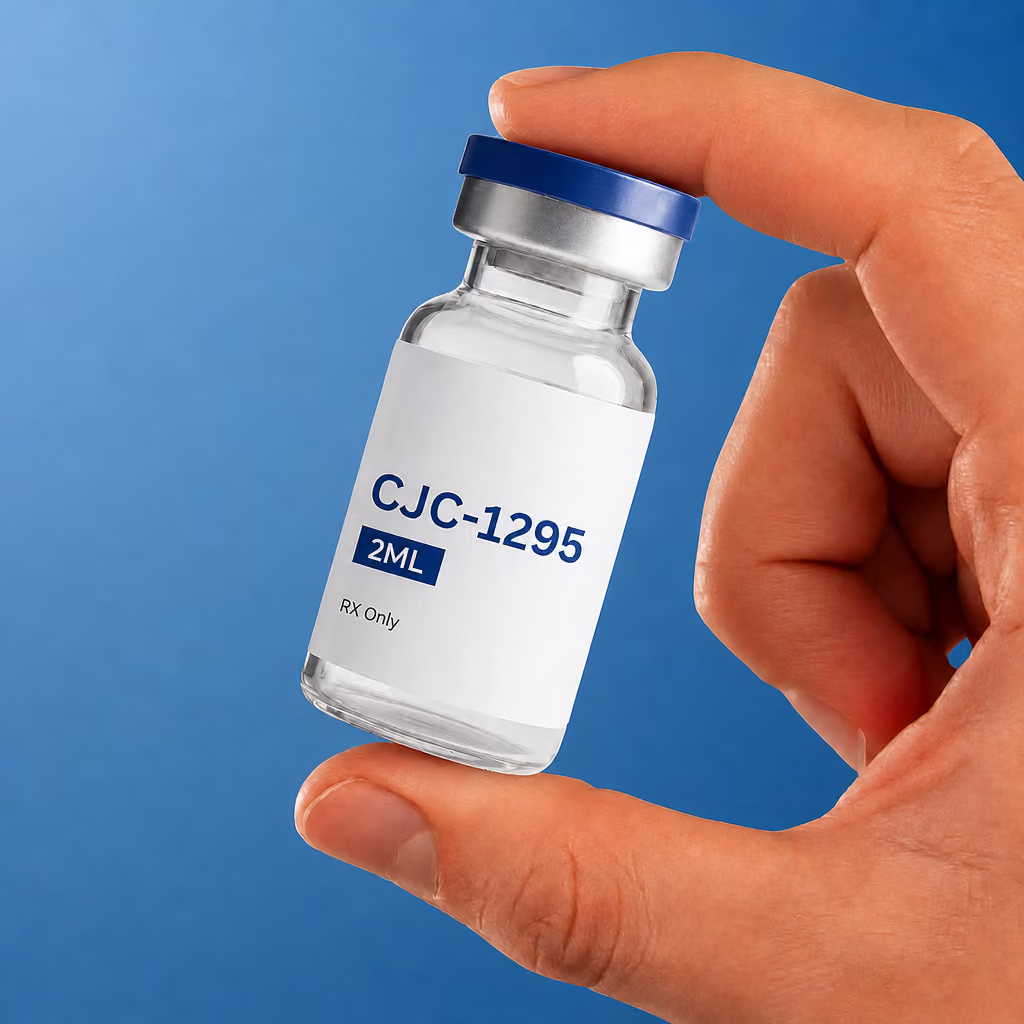
CJC-1295 and Growth Hormone Glossary
A plain English glossary of the terms you will meet when reading about CJC-1295 and growth hormone therapy, grouped by hormones, medicines, lab tests, dosing, research and safety.
- GHRH is the brain signal that tells the pituitary to release growth hormone; CJC-1295 is a modified version of it.
- IGF-1 is the main lab marker used to judge how the growth hormone system is responding.
- DAC is the albumin binding attachment that makes CJC-1295 last days instead of minutes.
- Half life is the time it takes for half of a medicine to be cleared from the blood.
- Compounded medicines are prepared by a pharmacy for an individual prescription and are not FDA approved products.
- Understanding these terms makes it easier to judge claims and talk with your prescriber.
In this article
Reading about CJC-1295 means meeting a lot of technical terms: GHRH, IGF-1, DAC, secretagogue, half life, compounding and more. This glossary explains them in plain English, grouped by topic, so you can follow research summaries, product labels and conversations with your prescriber. It deliberately does not include dosing protocols; for how dosing decisions are made, see our CJC-1295 dosage guide.
CJC-1295 is not approved by the FDA for any use. It is prescribed at a licensed physician's discretion after a medical review. This article is educational and is not medical advice.
Hormones and Glands
- Pituitary gland: A pea sized gland at the base of the brain that releases several hormones, including growth hormone. CJC-1295 acts on cells in the pituitary called somatotrophs.
- Hypothalamus: The part of the brain just above the pituitary that sends the signals controlling growth hormone release, including GHRH and somatostatin.
- Growth hormone (GH): A hormone released by the pituitary that influences growth in children and metabolism, body composition and tissue repair in adults. It is released in pulses, mostly during deep sleep.
- Growth hormone releasing hormone (GHRH): The signal from the hypothalamus that switches growth hormone release on. CJC-1295, sermorelin and tesamorelin are all modified versions of it.
- Somatostatin: The signal from the hypothalamus that switches growth hormone release off. The balance between GHRH and somatostatin shapes the natural pulse pattern.
- Ghrelin: A hormone best known for stimulating hunger, which also stimulates growth hormone release through its own receptor. Ipamorelin acts on this receptor.
- Insulin-like growth factor 1 (IGF-1): A hormone made mainly by the liver in response to growth hormone. It carries out many of growth hormone's effects and is stable through the day, so it is the main lab marker for the growth hormone system.
- Growth hormone axis: The chain of signals from the hypothalamus to the pituitary to the liver and tissues, including GHRH, somatostatin, growth hormone and IGF-1. Medicines that act anywhere on this chain can change the others.
- Pulsatile secretion: The natural pattern of releasing a hormone in bursts rather than at a steady level. Research found that growth hormone pulses were preserved during CJC-1295 stimulation.
Peptides and Medicines
- Peptide: A short chain of amino acids. Many hormones, including GHRH, are peptides. Peptide medicines are usually injected because they are broken down in the gut.
- Analog: A modified version of a natural molecule, designed to last longer or act more strongly. CJC-1295 is a GHRH analog.
- CJC-1295: A synthetic GHRH analog developed by ConjuChem. With DAC, it binds albumin in the blood and lasts days. It has never been approved by the FDA.
- Drug affinity complex (DAC): The chemical attachment on CJC-1295 that binds albumin in the blood. Early research showed it kept the peptide present in plasma beyond 72 hours.
- Modified GRF 1-29: A name often used for CJC-1295 without DAC. It has the same protective amino acid changes but no albumin attachment, so it is cleared much faster. It is not interchangeable with the DAC form.
- Sermorelin: The first 29 amino acids of natural GHRH. It is short acting and was approved by the FDA in 1997 for children and later withdrawn for reasons other than safety or effectiveness.
- Tesamorelin: A stabilised GHRH analog approved by the FDA for HIV associated abdominal fat. Its results should not be applied to CJC-1295.
- Ipamorelin: A peptide that acts on the ghrelin receptor, described in early research as the first selective growth hormone secretagogue. It has not been approved by the FDA.
- Growth hormone secretagogue: Any substance that prompts the body to release growth hormone. The term is often used specifically for ghrelin receptor agonists such as ipamorelin.
- Recombinant human growth hormone: Growth hormone made in the laboratory, which replaces the hormone directly rather than prompting the pituitary. It is approved for diagnosed deficiency and certain other conditions.
- Albumin: The most common protein in the blood. CJC-1295 with DAC attaches to it, which protects the peptide from breakdown and extends its action.
Frequently Asked Questions
What does GHRH mean?
Growth hormone releasing hormone, the signal from the brain that tells the pituitary gland to release growth hormone. CJC-1295 is a modified version of it.
What is IGF-1?
Insulin-like growth factor 1, a hormone made mainly by the liver in response to growth hormone. It is the main lab marker used to judge how the growth hormone system is responding.
What does DAC stand for?
Drug affinity complex, the chemical attachment on CJC-1295 that binds albumin in the blood and makes it last days instead of minutes.
What is a half life?
The time it takes for half of a medicine to be cleared from the blood. CJC-1295 with DAC had an estimated half life of 5.8 to 8.1 days in healthy adults.
What is the difference between a GHRH analog and a secretagogue?
A GHRH analog, such as CJC-1295, acts on the GHRH receptor. A growth hormone secretagogue such as ipamorelin acts on the ghrelin receptor, a separate pathway.
What does compounded mean?
Prepared by a licensed pharmacy for an individual prescription. Compounded medicines are not FDA approved products.
Lab Tests and Measurements
- Baseline: Your measurements before treatment starts, such as IGF-1 and blood sugar, used for comparison later.
- IGF-1 test: A blood test measuring IGF-1, used to judge the response to treatment and keep levels within a safe range for your age and sex.
- Fasting glucose: A blood sugar measurement taken after not eating overnight. It is monitored because growth hormone can make the body less sensitive to insulin.
- HbA1c: A blood test reflecting average blood sugar over roughly the previous three months.
- Reference range: The range of results considered typical for a test in healthy people of a given age and sex. IGF-1 ranges vary by age.
- Insulin sensitivity: How well the body responds to insulin. Higher growth hormone can reduce it, which can raise blood sugar.
Dosing and Administration Terms
- Subcutaneous injection: An injection into the fatty layer just under the skin, the route used for CJC-1295. Our subcutaneous injection technique guide explains how.
- Half life: The time it takes for half of a medicine to be cleared from the blood. In healthy adults, CJC-1295 with DAC had an estimated half life of 5.8 to 8.1 days.
- Reconstitution: Mixing a freeze dried powder with a sterile liquid before use. Our CJC-1295 dosage calculator and mixing chart walks through the arithmetic.
- Bacteriostatic water: Sterile water with a small amount of benzyl alcohol added to prevent bacterial growth, commonly used to reconstitute peptides.
- Concentration: The amount of medicine in each millilitre of liquid after mixing, usually written as mg per mL.
- Microgram (mcg) and milligram (mg): Units of weight. One milligram equals 1,000 micrograms. Confusing the two is a serious dosing error.
- U100 insulin syringe: A syringe marked so that 100 units equal 1 mL, commonly used to measure small peptide doses.
- Beyond use date: The date after which a compounded or mixed medicine should not be used, set by the pharmacy that prepared it.
- Lipohypertrophy: A lump of hardened fat under the skin caused by repeated injections in the same spot. Rotating sites prevents it.
- Sharps container: A rigid, puncture resistant container for used needles and syringes.
- Site rotation: Changing injection sites each time to prevent lumps and irritation under the skin.
Research and Regulatory Terms
- Placebo controlled trial: A study where some participants receive an inactive substance, so the effects of the real treatment can be compared fairly. The main CJC-1295 human studies were placebo controlled.
- Pharmacokinetics: How the body absorbs, distributes, breaks down and clears a medicine. Half life is a pharmacokinetic measure.
- Pharmacodynamics: What a medicine does to the body, such as raising growth hormone and IGF-1.
- Phase II trial: A medium sized study testing whether a medicine works for a condition and how safe it is. CJC-1295's Phase II trial was halted in 2006 after a participant died.
- FDA approval: The process by which the US Food and Drug Administration confirms a medicine is safe and effective for a specific use. CJC-1295 has never been approved.
- Off label: Using an approved medicine for a purpose other than the one it was approved for.
- Compounding: Preparation of a medicine by a licensed pharmacy for an individual prescription. Compounded medicines are not FDA approved products. The FDA has noted that compounded drugs containing CJC-1295 may pose risks related to peptide impurities.
- Research use only: A label on products not intended for human use. Such products are not made to pharmacy standards and should never be injected.
- WADA: The World Anti-Doping Agency. Growth hormone releasing factors, including CJC-1295, are prohibited at all times under its code.
Safety Terms
- Adverse event: Any unwanted medical occurrence during treatment, whether or not it is caused by the medicine.
- Vasodilatory reaction: A widening of blood vessels that can cause flushing, warmth or lightheadedness. The FDA has cited it among serious adverse events with CJC-1295.
- Contraindication: A condition or situation in which a medicine should not be used, such as active cancer or pregnancy for CJC-1295. See who should not use CJC-1295.
- Injection site reaction: Redness, itching, swelling or tenderness where the needle went in.
- Fluid retention: Mild swelling, often in the hands, feet or face, which can occur when growth hormone rises.
- MedWatch: The FDA program for reporting side effects and product problems, open to patients as well as health professionals.
Conclusion
Knowing the vocabulary makes it much easier to judge what you read about CJC-1295. The core ideas are simple: GHRH switches growth hormone on, CJC-1295 is a long acting modified GHRH thanks to its albumin binding DAC, IGF-1 is the lab marker that shows the response, and half life explains why it is injected infrequently. Regulatory terms such as FDA approval, compounding and research use only help you separate legitimate prescriptions from risky products. If you would like a physician to explain how these apply to you, you can start your online assessment.
In this article