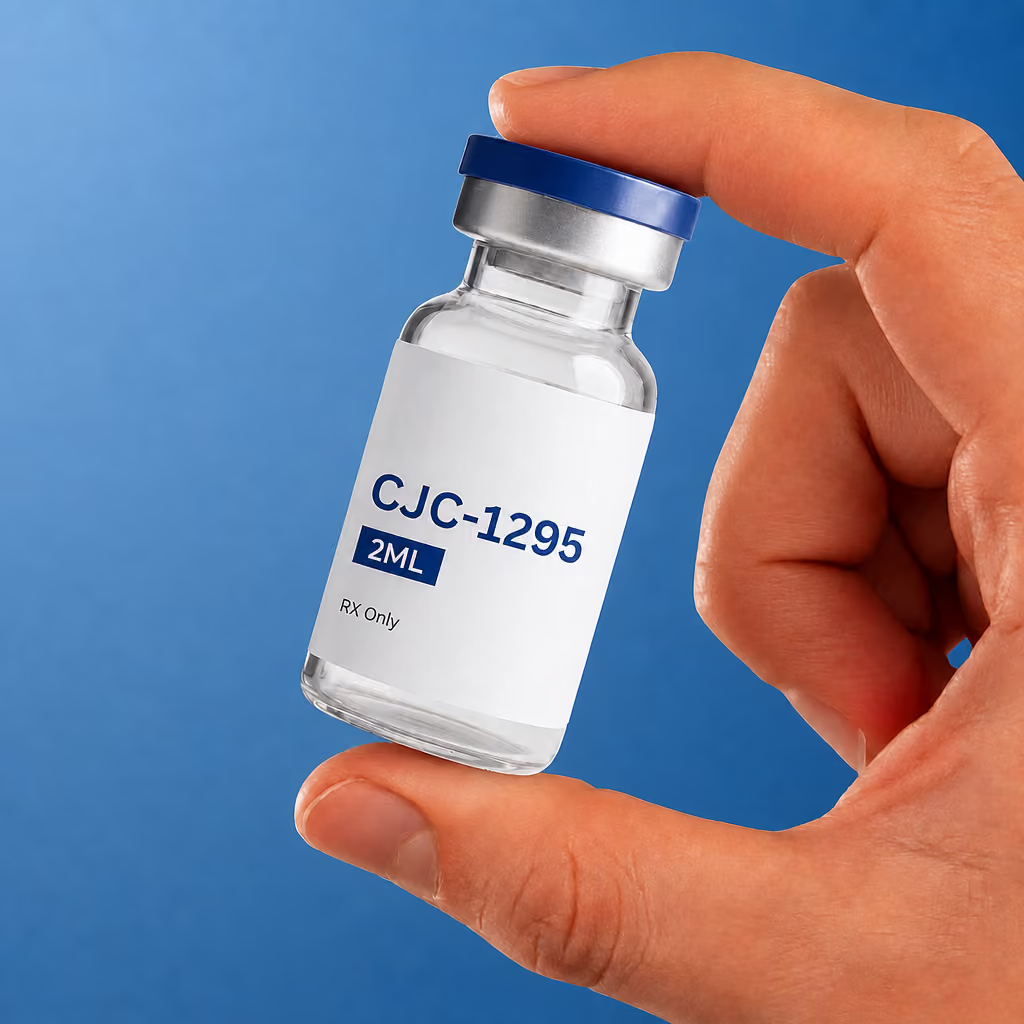
CJC-1295 and Athletes: Rules, Risks and Recovery
What athletes need to know about CJC-1295: it is prohibited at all times under the World Anti-Doping Agency code, the evidence for performance or recovery is absent, there are real safety questions, and there are proven ways to recover and train well in every season.
- CJC-1295 is prohibited at all times, in and out of competition, under the World Anti-Doping Agency code.
- The rule applies in every season, including the off season, and to amateur athletes in tested events.
- No published study shows that CJC-1295 improves performance, strength or recovery.
- The FDA has cited serious adverse events with CJC-1295, and long term safety is unknown.
- Supplements and research grade products can be contaminated with prohibited substances.
- Sleep, nutrition, load management and good injury care are the proven foundations of recovery.
In this article
Athletes hear a lot about peptides for recovery, body composition and performance, and CJC-1295 is one of the most frequently mentioned. This article starts with the most important fact for anyone who competes: CJC-1295 is prohibited in sport at all times. It then explains how testing works, what the evidence actually shows, the safety questions involved, and what helps athletes recover and train well through every part of the year. It replaces an earlier version of this page that discussed using peptides across training seasons.
CJC-1295 is not approved by the FDA for any use. It is prescribed at a licensed physician's discretion after a medical review. This article is educational and is not medical advice.
The Rule That Comes First
Growth hormone releasing factors, a group that includes CJC-1295, are on the World Anti-Doping Agency Prohibited List. They are prohibited at all times, both in and out of competition. That means there is no safe season to use them, no off season window and no washout period that makes them acceptable. The rule applies to professional and Olympic athletes, and also to amateur, masters and college athletes who compete in events that follow anti doping rules. Many national sports bodies, leagues and collegiate organisations either adopt the WADA list or have similar rules of their own.
Athletes are held responsible for any prohibited substance found in their samples, regardless of how it got there. Saying that a product was prescribed, labelled differently or taken by mistake does not normally avoid a violation.
Why Athletes Turn to Peptides
It helps to be honest about why peptides appeal to athletes. Training is demanding, injuries are frustrating, and progress can stall. Online forums, social media and some sellers present peptides as safe, natural or undetectable ways to recover faster and build muscle, often with confident dosing protocols and dramatic before and after stories. None of that changes the rules, the lack of evidence or the safety questions. Recognising the pressure, and having trusted people to talk to about it, makes it easier to make decisions that protect both your health and your career.
How Testing Works
Athletes in testing pools can be tested without notice, in and out of competition, through urine and blood samples. Anti doping laboratories test for growth hormone releasing factors and their markers, and test methods continue to develop. Samples can also be stored and reanalysed years later as methods improve, so a negative test today does not guarantee safety from a later finding. The practical message is simple: if you compete in tested sport, do not use CJC-1295.
Therapeutic Use Exemptions
Athletes with a genuine medical condition that requires a prohibited substance can apply for a Therapeutic Use Exemption. Exemptions are granted only for diagnosed conditions, with appropriate evidence, when no permitted alternative is reasonable. Because CJC-1295 is not an approved medicine for any condition and has no established medical indication, it is very unlikely to qualify. Athletes with a diagnosed growth hormone problem should work with an endocrinologist and their anti doping organisation on approved treatment options.
Checking Whether a Substance Is Prohibited
Before taking any medicine or supplement, check its status. The WADA Prohibited List is updated every year and published on the agency's website. Many national anti doping organisations offer online lookup tools for medicines, and team doctors and sports pharmacists can advise. If a product is labelled as a peptide, growth hormone booster or research chemical, assume it is prohibited unless an anti doping expert tells you otherwise. Keep a written record of everything you take and the checks you made, including dates and sources.
Consequences of a Positive Test
Anti doping rules work on strict liability: an athlete is responsible for any prohibited substance in their sample, whether or not they meant to take it. A positive test can lead to disqualification of results, loss of medals and prize money, a ban from competition that can last years, and lasting damage to reputation and sponsorships. Support staff who supply or encourage use can also face sanctions. Weighed against an unproven benefit, the risk is hard to justify.
Young Athletes
CJC-1295 has not been studied in anyone under 18 and should not be used by children or teenagers outside specialist medical care. Young athletes are still growing, and interfering with the growth hormone system during development carries additional unknown risks. Parents and coaches play an important role: talk openly about supplements and peptides, explain the rules and risks, and focus on the proven basics of training, sleep and nutrition.
Season by Season
| Season | Rule for CJC-1295 | What helps recovery instead |
|---|---|---|
| Off season | Prohibited; out of competition testing applies | Building strength and fitness base, sleep, nutrition |
| Pre season | Prohibited | Progressive training load, recovery days, protein |
| In season | Prohibited | Managing fatigue, sleep, hydration, injury care |
| Post season | Prohibited | Active rest, treating injuries, planning the next season |
Frequently Asked Questions
Is CJC-1295 banned in sport?
Yes. Growth hormone releasing factors, including CJC-1295, are prohibited at all times, in and out of competition, under the World Anti-Doping Agency code.
Can I use CJC-1295 in the off season?
No. The prohibition applies at all times, and athletes in testing pools can be tested without notice out of competition. Stored samples can also be reanalysed later.
Does CJC-1295 improve athletic recovery?
No published study has measured recovery, strength or performance with CJC-1295. Claims of recovery benefits are based on assumptions or anecdotes.
Can I get a therapeutic use exemption for CJC-1295?
It is very unlikely. Exemptions are granted for diagnosed conditions when no permitted alternative exists, and CJC-1295 is not an approved medicine for any condition.
Do amateur athletes need to follow these rules?
If you compete in an event that follows anti doping rules, yes. Many amateur, masters and college competitions test athletes.
What actually helps recovery?
Consistent sleep, enough energy and protein, hydration, planned training load with rest days, good injury care and managing stress.
What the Evidence Shows About Performance and Recovery
The published human research on CJC-1295 consists of short pharmacology studies in healthy volunteers. They showed that a single injection raised growth hormone two to tenfold for six days or more and IGF-1 one and a half to threefold for nine to eleven days. They did not measure strength, power, endurance, muscle mass, recovery, injury healing or any athletic outcome. There is no published evidence that CJC-1295 improves performance or recovery in athletes, and claims to the contrary are based on assumptions about growth hormone or on anecdotes.
It is also worth noting that research on growth hormone itself in healthy athletes has not consistently shown performance benefits, and higher growth hormone or IGF-1 is not the same as better training adaptation. Our review of CJC-1295 clinical studies sets out exactly what has been measured.
Safety Questions for Athletes
- Heart and circulation: the FDA has cited serious adverse events including increased heart rate and systemic vasodilatory reaction with CJC-1295. Intense training already places high demands on the heart.
- The halted trial: CJC-1295's only larger clinical trial was halted in 2006 after a participant died.
- Fluid and joints: effects linked to raised growth hormone, such as fluid retention and joint aches, can affect training.
- Blood sugar: growth hormone can reduce insulin sensitivity.
- Long action: each dose lasts about a week, so effects cannot be stopped quickly.
- Unknown long term effects: no long term safety data exist.
Our guide to CJC-1295 side effects and safety covers these in more detail.
Contamination and Research Grade Products
Many peptides reach athletes through websites selling research grade products or supplements. These are not made to pharmacy standards and may contain the wrong amount of peptide, a different peptide or other prohibited substances. Supplements marketed for recovery or muscle growth have also been found to contain undeclared prohibited ingredients. For tested athletes, the safest approach is to avoid products that are not independently certified for sport, and never to use research grade peptides.
What Actually Helps Recovery
- Sleep: the most powerful recovery tool, and the time when the body releases most of its own growth hormone. Aim for consistent, sufficient sleep, with naps when training load is high.
- Nutrition: enough total energy for your training, adequate protein spread through the day, and carbohydrate matched to training demands.
- Hydration: especially in hot conditions and long sessions.
- Load management: planned progression, deload weeks and rest days to avoid overtraining.
- Injury care: early assessment by a sports medicine professional and structured rehabilitation.
- Stress and mental health: psychological stress affects recovery and performance as much as physical load.
Our comparison of peptide therapy and lifestyle changes looks at why these foundations matter more than any shortcut.
Improving Body Composition for Sport
Many athletes want to carry more muscle or less fat for their sport. The proven route is a structured strength programme, enough protein and total energy to support training, and, where fat loss is needed, a modest and well timed calorie deficit that does not compromise performance. Rapid weight changes, especially before competition, increase the risk of injury and illness. A sports dietitian can plan this safely around your training and competition calendar.
Injuries and Return to Play
Injured athletes are often the most tempted by claims that peptides speed healing. There is no published evidence that CJC-1295 improves injury healing in humans, and using it would still breach anti doping rules. Early assessment by a sports medicine professional, an accurate diagnosis, a structured rehabilitation plan and a gradual return to training are what reduce time lost and the risk of reinjury. Being patient with rehabilitation protects both your health and your eligibility to compete.
Planning Training Across the Year
Good periodisation, rather than any substance, is what allows athletes to build fitness, peak for competition and recover afterwards. The off season is for building a base and addressing weaknesses, pre season for sharpening, in season for maintaining and managing fatigue, and post season for active rest and recovery from injury. Working with a qualified coach and, where available, a sports dietitian and sports medicine team will do more for performance across the year than any product.
Training in the Heat and Traveling to Compete
Summer training and travel bring their own challenges, including dehydration, heat illness and disrupted sleep across time zones. Our guide to summer heat and peptide therapy covers heat safety, and our guide to traveling with peptides covers airport rules for anyone prescribed medication. For athletes, travel does not change the anti doping rules.
Masters and Recreational Athletes
Older and recreational athletes are sometimes drawn to peptides for recovery as they notice slower bounce back between sessions. If you compete in any event that follows anti doping rules, the prohibition applies to you too. If you do not compete, the same evidence and safety considerations apply: no proven benefit for recovery, real safety questions, and a strong case for focusing on sleep, nutrition and sensible training load. Anyone considering CJC-1295 should have a full medical assessment; our guide on who should not use CJC-1295 explains who should avoid it.
Mental Health and Pressure
The pressure to perform, recover quickly and look a certain way can be intense, and it is one of the reasons athletes take risks with substances. Talking to a coach, team doctor, sports psychologist or someone you trust about that pressure is a sign of good judgement, not weakness. Many sports organisations offer confidential support services for athletes, and using them early can prevent a short term decision from turning into a long term problem.
Questions to Ask Your Support Team
- Does my sport or event follow the WADA Prohibited List or similar rules?
- How can I check whether a medicine or supplement is permitted?
- Are my sleep, nutrition and training load set up for good recovery?
- Should I see a sports medicine doctor about a slow recovering injury?
- Which supplements, if any, are independently certified for sport?
Conclusion
For athletes, the most important fact about CJC-1295 is that it is prohibited at all times, in and out of competition, under the World Anti-Doping Agency code, in every season and at every level of tested sport. Beyond the rules, there is no published evidence that it improves performance or recovery, the FDA has cited serious adverse events, and research grade products carry contamination risks. Sleep, nutrition, hydration, load management and good injury care are the proven foundations of recovery. If you do not compete and want a physician to review your options, you can start your online assessment.
In this article